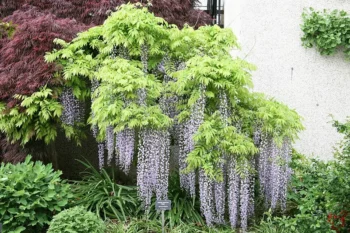
Japanese Wisteria: Beautiful but Problematic for North American Gardens
If you’ve ever been enchanted by those stunning cascades of purple flowers draping over pergolas and garden structures, you’ve likely encountered Japanese wisteria (Wisteria floribunda). While undeniably gorgeous, this Asian import comes with some serious baggage that every gardener should understand before considering it for their landscape.
What is Japanese Wisteria?
Japanese wisteria is a perennial climbing vine native to Japan that has made itself quite at home across much of the United States. This vigorous grower produces some of the most spectacular flower displays in the plant kingdom – think drooping clusters of fragrant purple-blue blooms that can stretch up to 20 inches long. The flowers appear in late spring before the compound leaves fully emerge, creating a truly breathtaking sight.
You might also see this plant listed under its botanical synonyms Kraunhia floribunda or Rehsonia floribunda, though Wisteria floribunda remains the accepted scientific name.
Where You’ll Find Japanese Wisteria
This non-native species has spread far beyond its original garden homes and now grows wild across 21 states, including Alabama, Arkansas, District of Columbia, Florida, Georgia, Illinois, Kentucky, Louisiana, Maine, Maryland, Massachusetts, Mississippi, New Hampshire, New Jersey, New York, North Carolina, Ohio, Pennsylvania, South Carolina, Tennessee, Texas, and Virginia.
- Species observed
- No observations
The Invasive Reality
Here’s where things get complicated. Japanese wisteria isn’t just a pretty face – it’s an aggressive invader that’s causing real problems for native ecosystems. Several states have officially recognized its invasive status:
- Maryland lists it as Tier 2 invasive
- Missouri classifies it as Invasive (IPC)
- North Carolina considers it invasive
- Wisconsin has it on the prohibited list
This twining, climbing vine can quickly overwhelm native trees and shrubs, literally choking them out as it reaches for sunlight. Once established, it reproduces spontaneously and spreads without any help from humans.
Why Gardeners Fall for Japanese Wisteria
It’s easy to understand the appeal. Japanese wisteria offers:
- Spectacular spring flower displays that can stop traffic
- Fragrant blooms that attract bees, butterflies, and hummingbirds
- Dense coverage perfect for privacy screens
- Adaptability to various growing conditions
- Hardiness across USDA zones 4-9
Growing Conditions and Care
If Japanese wisteria weren’t invasive, it would be considered an excellent garden plant. It thrives in full sun to partial shade and adapts to most well-draining soils. The vine requires sturdy support structures – we’re talking heavy-duty pergolas, not flimsy trellises – because mature plants can become incredibly heavy and strong.
Japanese wisteria typically takes 3-5 years to establish and begin blooming reliably. Once it gets going, annual pruning after flowering becomes essential to keep it manageable.
Better Alternatives for Your Garden
Instead of risking ecological damage with Japanese wisteria, consider these native alternatives that offer similar beauty without the environmental concerns:
- American Wisteria (Wisteria frutescens) – Native cousin with shorter but still beautiful flower clusters
- Kentucky Wisteria (Wisteria macrostachya) – Another native option with fragrant purple flowers
- Crossvine (Bignonia capreolata) – Native climber with trumpet-shaped flowers
- Trumpet Vine (Campsis radicans) – Vigorous native vine with orange-red blooms
The Bottom Line
While Japanese wisteria undoubtedly creates stunning garden displays, its invasive nature makes it a poor choice for responsible gardening. The risk of it escaping cultivation and damaging local ecosystems simply isn’t worth the temporary beauty it provides.
If you already have Japanese wisteria in your garden, consider removing it and replacing it with native alternatives. Your local wildlife – and future generations of gardeners – will thank you for making the environmentally conscious choice.