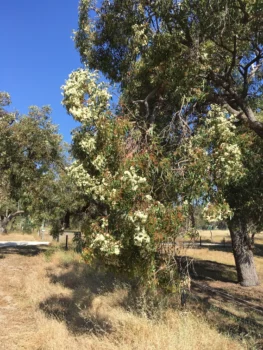
Jarrah Tree: A Majestic Australian Native for Large Landscapes
If you’re dreaming of a stately tree that can transform your large landscape into something truly spectacular, let me introduce you to the jarrah tree (Eucalyptus marginata). This impressive Australian native has found its way into Hawaiian landscapes, where it’s made quite the impression with its towering presence and distinctive reddish bark.
What Exactly Is Jarrah?
Jarrah is a perennial tree that belongs to the eucalyptus family, and boy, does it know how to make a statement! This single-trunked beauty typically grows well beyond 13-16 feet in height – we’re talking about a tree that can reach truly impressive proportions. With its characteristic fibrous, reddish-brown bark and dark green lance-shaped leaves, jarrah brings a touch of Australian wilderness wherever it grows.
Where Does Jarrah Come From?
Originally hailing from southwestern Western Australia, jarrah thrives in Mediterranean-style climates with well-draining soils. In the United States, you’ll find established populations in Hawaii, where this non-native species has adapted well to local conditions and reproduces on its own.
- Species observed
- No observations
Should You Plant Jarrah in Your Garden?
Here’s the thing about jarrah – it’s not a tree for everyone, and that’s perfectly okay! Before you fall head-over-heels for this Australian beauty, consider these important factors:
The Good Stuff
- Creates magnificent shade once established
- Drought-tolerant after the first few years
- Stunning visual appeal with unique reddish bark
- Attractive cream-colored flowers that pollinators love
- Makes an excellent windbreak for large properties
The Reality Check
- Needs lots of space – not suitable for small yards
- Can be sensitive to frost when young
- Takes time to establish and reach maturity
- Being non-native, it won’t support local wildlife ecosystems as effectively as native alternatives
Native Alternatives to Consider
Since jarrah isn’t native to mainland United States, you might want to explore native shade trees that can provide similar benefits while supporting local ecosystems. Consider researching native oaks, maples, or other large native trees suitable for your specific region.
Perfect Spots for Jarrah
If you’ve got the space and live in USDA hardiness zones 9-11, jarrah could be your landscape’s crown jewel. It’s perfect for:
- Large residential properties with plenty of room
- Parks and public spaces
- Botanical gardens
- Rural landscapes
- Areas needing substantial windbreaks
How to Grow Jarrah Successfully
Getting Started
Plant your jarrah in spring when temperatures are mild and rainfall is more consistent. Choose a sunny location with excellent drainage – this tree absolutely hates wet feet!
Soil and Site Preparation
Jarrah prefers well-draining soils with a slightly acidic to neutral pH. If your soil tends to hold water, consider planting on a slight slope or amending with organic matter to improve drainage.
Care and Maintenance
- Water regularly during the first 2-3 years while the tree establishes
- Apply mulch around the base to retain moisture and suppress weeds
- Protect young trees from strong winds with stakes if necessary
- Prune minimally – jarrah naturally develops a good shape
- Once established, jarrah becomes quite drought-tolerant
Pollinator Benefits
Here’s something bee-utiful about jarrah – its cream-colored flowers are magnets for bees and other pollinators. The nectar-rich blooms provide valuable food sources, making this tree a friend to your local pollinator population.
The Bottom Line
Jarrah is undeniably gorgeous and can be a fantastic addition to the right landscape. If you have the space, live in an appropriate climate zone, and want a tree that will become a true landscape focal point, jarrah might be worth considering. Just remember to think about native alternatives first, as they’ll provide the same beauty while supporting local wildlife and ecosystems.
Whatever you decide, make sure you’re planting for the long term – jarrah is a commitment, but for the right gardener in the right space, it’s a commitment that pays off in decades of natural beauty!