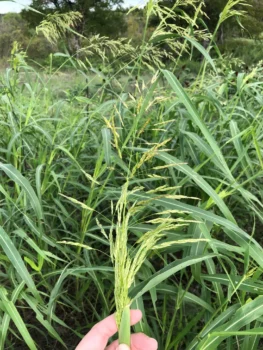
Johnsongrass: Why This Invasive Grass Should Stay Out of Your Garden
If you’ve stumbled across Johnsongrass (Sorghum halepense) in your research or perhaps found it growing wild on your property, you might be wondering whether this perennial grass deserves a spot in your landscape. The short answer? Absolutely not. While this robust grass might seem impressive with its towering height and rapid growth, Johnsongrass is actually an invasive species that can quickly become your garden’s worst nightmare.
What Is Johnsongrass?
Johnsongrass is a perennial grass that originally hails from the Mediterranean region, parts of Asia, and Africa—definitely not North America. This non-native species has made itself far too comfortable across our continent, establishing populations everywhere from Canada to Hawaii, Puerto Rico, and throughout all 48 contiguous states. It’s also known by its botanical name, Sorghum halepense, and has several scientific synonyms including Holcus halepensis.
This isn’t your typical ornamental grass. Johnsongrass is a rhizomatous perennial that can reach heights of 3.5 feet, with a coarse texture and dense summer foliage that becomes more moderate in winter. It produces yellow flowers in late summer that aren’t particularly showy, followed by brown, conspicuous seeds from summer through fall.
Geographic Distribution and Invasive Status
Johnsongrass has spread like wildfire across North America, establishing populations in Alabama, Arizona, Arkansas, California, Colorado, Connecticut, Delaware, Florida, Georgia, Hawaii, Idaho, Illinois, Indiana, Iowa, Kansas, Kentucky, Louisiana, Maryland, Massachusetts, Michigan, Mississippi, Missouri, Montana, Nebraska, Nevada, New Hampshire, New Jersey, New Mexico, New York, North Carolina, North Dakota, Ohio, Oklahoma, Oregon, Pennsylvania, Rhode Island, South Carolina, South Dakota, Tennessee, Texas, Utah, Vermont, Virginia, Washington, West Virginia, Wisconsin, Wyoming, and various U.S. territories including Guam, Palau, and Puerto Rico.
- Species observed
- No observations
Here’s the critical information every gardener needs to know: Johnsongrass is officially listed as invasive in multiple states. Alabama classifies it as Category 2 invasive, Missouri lists it as invasive, North Carolina considers it invasive, and Wisconsin has gone so far as to prohibit it entirely. This invasive status isn’t just bureaucratic paperwork—it reflects real ecological damage this species can cause.
Why Johnsongrass Is Problematic
Johnsongrass earns its invasive reputation through several troublesome characteristics:
- Rapid spread: Both seed and vegetative spread rates are rapid, meaning it can quickly colonize new areas
- Allelopathic properties: It’s a known allelopath, meaning it releases chemicals that inhibit the growth of other plants
- Aggressive growth: With a rapid growth rate and long lifespan, it outcompetes native species
- High seed production: Each plant produces abundant seeds (about 119,280 seeds per pound!) that spread rapidly
- Rhizomatous growth: Underground rhizomes allow it to spread vegetatively and reestablish even after cutting
Growing Conditions (For Identification Purposes)
Understanding where Johnsongrass thrives can help you identify potential problem areas on your property. This adaptable grass grows in various soil types—from coarse to fine textured soils—and prefers areas with:
- Medium fertility levels
- High moisture availability
- pH between 5.0 and 7.0
- Full sun (it’s shade intolerant)
- Areas with at least 165 frost-free days
- Annual precipitation between 32-60 inches
In terms of wetland status, Johnsongrass typically occurs in non-wetlands but may occasionally appear in wetland areas across most regions, with slightly higher wetland tolerance in the Caribbean.
Wildlife Considerations
While Johnsongrass does provide some wildlife value—comprising 10-25% of large animals’ diets and 5-10% of terrestrial birds’ diets—this doesn’t justify its cultivation. The ecological damage it causes by displacing native plants far outweighs these benefits. Native grasses provide superior wildlife habitat while supporting entire ecosystems of insects, birds, and other wildlife that co-evolved with them.
What to Do If You Find Johnsongrass
If you discover Johnsongrass on your property, focus on removal rather than management:
- Early identification: Learn to recognize its coarse texture, rhizomatous growth pattern, and summer yellow flowers
- Prevent spread: Remove plants before they set seed in late summer/fall
- Persistent removal: Due to its rhizomatous nature, you may need multiple removal sessions
- Professional consultation: For large infestations, consider consulting with local extension services or land management professionals
Native Alternatives to Consider
Instead of risking Johnsongrass in your landscape, consider these native grass alternatives that provide better wildlife value without invasive tendencies:
- Big bluestem (Andropogon gerardii)
- Switchgrass (Panicum virgatum)
- Indian grass (Sorghastrum nutans)
- Little bluestem (Schizachyrium scoparium)
These native options offer superior ecological benefits, support local wildlife, and won’t turn your garden into an invasive species battlefield.
The Bottom Line
Johnsongrass might grow easily and reach impressive heights, but its invasive nature makes it a poor choice for any garden or landscape. With its rapid spread, allelopathic properties, and official invasive status in multiple states, this grass creates more problems than it solves. Stick with native alternatives that provide better wildlife habitat, support local ecosystems, and won’t require constant battles to keep them in check. Your garden—and your local environment—will thank you for making the responsible choice.