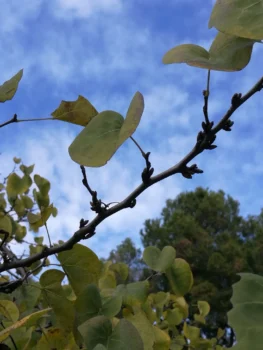
Judas-Tree: A Mediterranean Beauty for Your Garden
If you’re looking for a tree that puts on quite the spring spectacle, the Judas-tree (Cercis siliquastrum) might just be your new garden crush. This Mediterranean native, also known as the lovetree, is famous for its rather unusual habit of blooming directly on its branches and trunk – a quirky trait that makes it a real conversation starter in any landscape.
What Makes the Judas-Tree Special?
The Judas-tree is like that friend who shows up fashionably early to the party. While most trees are still waking up from winter, this beauty bursts into bloom with clusters of bright pink-purple flowers coating its bare branches in early spring. The flowers appear before the leaves, creating a stunning display that’s hard to miss.
Once the show is over, heart-shaped leaves emerge, followed by flat, reddish-brown seed pods that dangle like natural ornaments well into winter. It’s a tree that truly offers four seasons of interest, growing to about 15-25 feet tall and wide at maturity.
Where Does It Come From?
The Judas-tree hails from the Mediterranean region, including Southern Europe and Western Asia. It’s perfectly adapted to hot, dry summers and mild winters – think olive groves and ancient stone walls.
Should You Plant One?
Here’s the thing about the Judas-tree: it’s not native to North America, but it’s also not considered invasive. If you live in USDA hardiness zones 6-9 and have the right growing conditions, it can be a wonderful addition to your landscape. However, if you’re focused on supporting local ecosystems, you might want to consider native alternatives first.
Some great native options that offer similar spring interest include:
- Eastern Redbud (Cercis canadensis) – a close relative with similar flowers
- Flowering Dogwood (Cornus florida) – stunning spring blooms and fall color
- Serviceberry (Amelanchier species) – beautiful flowers plus berries for wildlife
Growing Conditions and Care
If you decide to welcome a Judas-tree into your garden, here’s what it needs to thrive:
Light and Location: Full sun to partial shade works best. These trees appreciate a spot with good air circulation and protection from strong winds.
Soil Requirements: Well-draining soil is crucial – the Judas-tree absolutely hates wet feet. It’s actually quite tolerant of poor, rocky, or alkaline soils, making it perfect for challenging sites where other trees might struggle.
Watering: Once established (usually after the first year), Judas-trees are quite drought tolerant. Water regularly during the first growing season to help establish a strong root system.
Planting and Maintenance Tips
Spring is the ideal time to plant your Judas-tree. Here are some tips for success:
- Dig a hole twice as wide as the root ball but no deeper
- Plant at the same depth it was growing in the container
- Water thoroughly after planting and mulch around the base
- Minimal pruning is needed – just remove dead or crossing branches
- Be patient – young trees may take a few years to really put on their flowering show
Wildlife and Pollinator Benefits
While not native, the Judas-tree does offer some benefits to local wildlife. Its early spring flowers provide nectar for bees and butterflies when few other food sources are available. The seeds may occasionally be eaten by birds, though it’s not a primary food source.
The Bottom Line
The Judas-tree is undeniably beautiful and can be a stunning focal point in the right garden. If you’re in the appropriate climate zone and have well-draining soil, it’s relatively easy to grow and maintain. Just remember that choosing native plants first is always the best way to support local ecosystems and wildlife. But if you have room for both native and non-native plants in your landscape plan, the Judas-tree’s unique beauty and Mediterranean charm might just win you over.