Jungle Rice: The Weedy Grass That Shows Up Uninvited
If you’ve ever wondered about that grassy weed popping up in your garden beds or along walkways, you might be looking at jungle rice (Echinochloa colona). This annual grass has a knack for appearing where you least expect it, and while it’s not necessarily the villain of the plant world, it’s probably not what you had in mind for your landscape design.
What Exactly Is Jungle Rice?
Jungle rice goes by the scientific name Echinochloa colona, and it’s also been known as Panicum colonum in botanical circles. This annual grass belongs to the broader family of grasses and grass-like plants, and true to its weedy nature, it has a moderate growth rate that can reach up to 2 feet tall. Don’t let the name fool you – it’s not related to the rice in your pantry, though it does produce small, yellowish seeds.
Where You’ll Find This Uninvited Guest
Jungle rice has made itself at home across a surprisingly wide range of the United States. You can spot it from Alabama to Washington, and from Arizona to Vermont. It’s also established itself in Hawaii, Guam, Palau, Puerto Rico, and the U.S. Virgin Islands. Basically, if you live in the continental U.S. or U.S. territories, there’s a good chance jungle rice is lurking somewhere nearby.
- Species observed
- No observations
The Not-So-Native Truth
Here’s the thing about jungle rice – it’s not native to North America. This grass originally hails from tropical and subtropical regions of Africa and Asia, but it has successfully established itself across the United States. It reproduces on its own and tends to persist wherever it lands, making it a naturalized part of many ecosystems, whether we invited it or not.
What Does It Look Like?
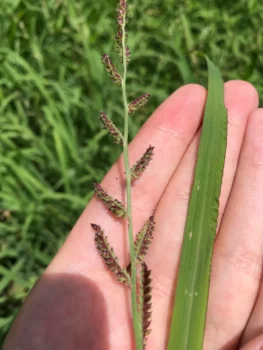
Jungle rice presents itself as a semi-erect bunch grass with fine-textured, green foliage. In late spring, it produces small, green flowers that aren’t particularly showy – you probably won’t even notice them unless you’re looking closely. The plant has a porous appearance and maintains its green color throughout its growing season, which runs from spring through fall when it sets those yellow seeds.
Where It Likes to Grow
This adaptable grass isn’t too picky about its living conditions, which partly explains its widespread success. Jungle rice can handle:
- Various soil types from coarse to fine textured soils
- pH levels ranging from 4.0 to 8.5 (quite a range!)
- Areas that get 12 to 60 inches of precipitation annually
- Both wetland and non-wetland conditions, though it leans toward moister spots
- Full sun conditions (it’s not shade tolerant)
One thing it doesn’t handle well is drought or cold temperatures – it needs at least 150 frost-free days and doesn’t appreciate temperatures below 37°F.
Should You Plant Jungle Rice?
Honestly, probably not. While jungle rice isn’t officially listed as invasive, it’s not exactly bringing much to the landscaping party either. It offers minimal aesthetic appeal, doesn’t provide significant benefits to pollinators (it’s wind-pollinated), and its wildlife benefits are largely unknown. If you’re looking for a grass for your landscape, you’d be better served by choosing native alternatives that support local ecosystems.
Native Alternatives to Consider
Instead of jungle rice, consider these native grass options that will better serve your garden and local wildlife:
- Native bunch grasses specific to your region
- Little bluestem (Schizachyrium scoparium)
- Buffalo grass (Poaceae family natives)
- Regional sedges that provide similar texture but better ecological value
Managing Jungle Rice in Your Garden
If jungle rice has already made itself at home in your space, here’s what you should know: it spreads rapidly by seed, produces about 123,000 seeds per pound, and has high seedling vigor. The good news is that it’s an annual, so preventing seed production can help control future populations. Hand-pulling before it sets seed is your best bet for small infestations.
The Bottom Line
Jungle rice is one of those plants that exists in the gray area of gardening – not necessarily harmful, but not particularly helpful either. While it’s successfully adapted to life across North America, it’s not contributing much to native ecosystems or landscape beauty. If you encounter it in your garden, you can remove it without guilt, and if you’re planning new plantings, there are plenty of native grasses that will give you better bang for your gardening buck.
Remember, the goal of native gardening is to create spaces that support local wildlife and ecosystems while bringing beauty to our landscapes. Jungle rice, while not villainous, simply doesn’t check those boxes the way thoughtfully chosen native plants do.