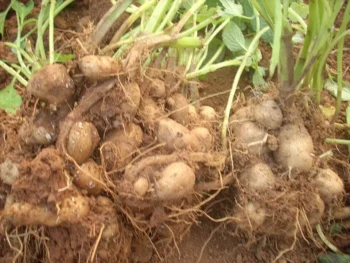
Kaffir Potato: The Mysterious Garden Edible You’ve Probably Never Heard Of
Meet the kaffir potato (Plectranthus esculentus), a plant that’s as enigmatic as its name suggests. Don’t let the potato part fool you – this isn’t your average spud, and it’s certainly not related to the potatoes you’d find in your local grocery store. This intriguing member of the mint family has been quietly growing in gardens and wild spaces, though information about this particular species remains surprisingly scarce.
What’s in a Name?
The kaffir potato goes by its scientific name Plectranthus esculentus, and you might occasionally see it listed under its botanical synonym Coleus esculentus. The name kaffir potato reflects its edible nature – the esculentus part of its scientific name literally means edible in Latin. However, it’s worth noting that this plant belongs to the Plectranthus genus, making it a relative of other aromatic herbs rather than true potatoes.
Where Does It Come From?
While the exact native range of Plectranthus esculentus isn’t well-documented in readily available sources, it appears to originate from parts of Africa. Like many plants in the Plectranthus family, it likely evolved in regions with specific climate conditions that supported its growth and development over thousands of years.
The Mystery Plant Dilemma
Here’s where things get interesting – and a bit frustrating for curious gardeners. Despite its intriguing name and edible classification, reliable, specific information about Plectranthus esculentus is surprisingly limited. This presents a challenge for gardeners who want to know:
- How big does it get?
- What growing conditions does it prefer?
- Is it hardy in my climate zone?
- What does it actually look like?
- How do you grow and care for it?
The scarcity of detailed cultivation information suggests this might be a plant that’s either very specialized in its requirements, not widely cultivated, or perhaps confused with other similar species in the trade.
Should You Try Growing It?
The lack of comprehensive growing information makes it difficult to provide specific cultivation advice for Plectranthus esculentus. If you’re determined to grow this plant, you’ll likely need to:
- Source it from specialized native plant nurseries or botanical gardens
- Research growing conditions for similar Plectranthus species as a starting point
- Be prepared for some trial and error in your growing approach
- Connect with other gardeners or botanical experts who may have experience with this species
Consider Native Alternatives
Given the limited information available about successfully growing kaffir potato, you might want to consider well-documented native edibles that are suited to your specific region. Native plants offer the advantage of being adapted to your local climate and supporting local ecosystems, plus you’ll find plenty of reliable growing information to ensure your success.
Research native edible plants in your area – many regions have indigenous vegetables, herbs, or tubers that have been sustainably harvested for generations and are much better documented than this mysterious kaffir potato.
The Bottom Line
Plectranthus esculentus remains something of a botanical puzzle. While its name suggests it’s an edible plant worth growing, the lack of readily available cultivation information makes it a challenging choice for most home gardeners. If you’re drawn to unusual edibles, consider starting with better-documented native alternatives that offer similar intrigue but with the added benefits of reliable growing guidance and local ecosystem support.
Sometimes the most interesting plants are the ones that keep us guessing – but when it comes to successful gardening, it’s often better to choose plants we can actually grow successfully!