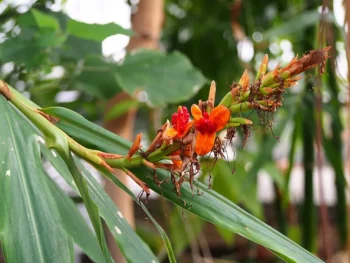
Kahila Garland-Lily: A Beautiful but Problematic Garden Choice
The Kahila garland-lily (Hedychium gardnerianum), also known as kahili ginger, is one of those plants that perfectly illustrates why beauty isn’t everything in the garden world. While this perennial certainly knows how to make an entrance with its stunning yellow and red flower spikes, it comes with some serious baggage that every gardener should know about before considering it for their landscape.
What Makes Kahila Garland-Lily Stand Out
This impressive forb can reach heights of 6-8 feet, creating dramatic vertical interest with its broad, lance-shaped leaves and showy terminal flower clusters. The fragrant blooms, which appear in late summer to fall, feature bright yellow petals with striking red stamens that seem to dance above the foliage like exotic butterflies. It’s no wonder this Himalayan native caught the attention of gardeners looking to add tropical flair to their landscapes.
The Geographic Reality
Originally from the Himalayan regions of Nepal and northern India, Hedychium gardnerianum has established itself in Hawaii, where it’s considered a non-native species that reproduces spontaneously in the wild. This ability to thrive and spread without human intervention might sound like a gardener’s dream, but it’s actually a red flag.
- Species observed
- No observations
Why You Should Think Twice About Planting It
Here’s where things get complicated. While the data on its official invasive status may be unclear, Kahila garland-lily is widely recognized as a highly problematic invasive species in Hawaii and other tropical regions. This plant doesn’t just survive—it dominates, forming dense stands that crowd out native vegetation and disrupt local ecosystems.
The plant’s aggressive spreading habit, combined with its ability to reproduce both through underground rhizomes and seeds, makes it a formidable colonizer. What starts as one attractive specimen can quickly become a management nightmare that’s incredibly difficult to control.
Growing Conditions and Care
If you’re still curious about its growing requirements (perhaps for identification purposes), Kahila garland-lily is surprisingly adaptable:
- USDA Hardiness Zones: 8-11
- Soil: Prefers moist, well-draining soil but tolerates various conditions
- Light: Thrives in partial shade to full sun
- Water: Regular watering preferred; has facultative wetland status, meaning it can handle both wet and moderately dry conditions
- Maintenance: Unfortunately, very low maintenance—it practically grows itself
Better Alternatives for Your Garden
Instead of risking the ecological consequences of planting Kahila garland-lily, consider these native Hawaiian alternatives that offer similar tropical appeal without the invasive baggage:
- Native Hawaiian gingers like ‘Awapuhi (Zingiber zerumbet)
- Bird of paradise species native to your region
- Native flowering shrubs that provide vertical interest and wildlife benefits
The Bottom Line
While Hedychium gardnerianum certainly has ornamental value, its invasive tendencies make it a poor choice for responsible gardening. The old saying look but don’t touch definitely applies here. If you encounter this plant in the wild or in existing landscapes, it’s best to appreciate its beauty from a distance while working toward more sustainable gardening choices.
Remember, creating a beautiful garden doesn’t have to come at the expense of local ecosystems. By choosing native plants or well-behaved non-natives, you can have both stunning landscapes and a clear conscience.