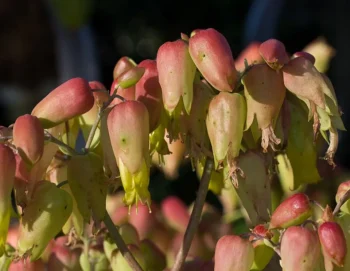
Kalanchoe laxiflora: A Delicate Succulent with Scalloped Charm
Meet Kalanchoe laxiflora, a lesser-known member of the popular Kalanchoe family that’s quietly winning hearts with its distinctive scalloped leaves and cheerful blooms. While you might not find this beauty at every garden center, it’s worth getting to know this unique succulent that brings a touch of Madagascar magic to your collection.
What Makes This Plant Special?
Kalanchoe laxiflora stands out from its more common cousins with its delicately textured, thick leaves that feature charming scalloped or crenated edges. The plant produces small clusters of tubular flowers in warm shades of orange to red, creating a lovely contrast against the green foliage. You might also see this plant listed under its botanical synonym, Bryophyllum crenatum Baker, in some references.
Where Does It Come From?
This succulent calls the island of Madagascar home, where it evolved in the unique climate and growing conditions of this biodiversity hotspot. As a non-native plant in North American gardens, it brings an exotic flair but won’t naturalize in most climates due to its frost sensitivity.
Garden Role and Design Applications
Kalanchoe laxiflora shines brightest in these garden settings:
- Container gardens and patio displays
- Indoor houseplant collections
- Rock gardens in warm climates
- Succulent and desert-themed landscapes
- Mixed succulent arrangements
Its compact size and interesting texture make it an excellent choice for adding variety to succulent compositions, whether indoors or out.
Growing Conditions and Care
Like most succulents, Kalanchoe laxiflora appreciates the less is more approach to care:
- Soil: Well-draining, sandy or cactus potting mix
- Light: Bright, indirect light (avoid harsh afternoon sun)
- Water: Allow soil to dry completely between waterings
- Temperature: Prefers temperatures above 50°F (10°C)
- Humidity: Low to moderate humidity levels
Hardiness and Climate Considerations
This Madagascar native thrives in USDA zones 9-11, but don’t let that limit you! In cooler climates, it makes an excellent houseplant or can spend summers outdoors before coming inside for winter protection. The key is protecting it from frost, which can quickly damage or kill the plant.
Planting and Care Tips
Getting started with Kalanchoe laxiflora is refreshingly straightforward:
- Plant in containers with drainage holes to prevent waterlogged roots
- Water deeply but infrequently – typically every 1-2 weeks
- Propagate easily from leaf cuttings or small offsets
- Bring indoors when temperatures drop below 50°F
- Watch for common succulent pests like mealybugs
Wildlife and Pollinator Benefits
While not extensively studied, the small flowers of Kalanchoe laxiflora may provide nectar for tiny pollinators when grown outdoors in suitable climates. However, since this isn’t a native species, its wildlife value will be limited compared to indigenous plants.
Should You Grow It?
Kalanchoe laxiflora can be a delightful addition to your plant collection, especially if you enjoy unique succulents or are building a Madagascar-themed garden. While it won’t support local wildlife like native plants would, it’s not considered invasive and can be grown responsibly in containers.
If you’re passionate about supporting local ecosystems, consider exploring native succulents and drought-tolerant plants in your area as alternatives. Many regions have fascinating native species that offer similar low-maintenance appeal while providing crucial habitat for local wildlife.
Whether you choose this exotic beauty or opt for native alternatives, the world of succulents offers endless opportunities for garden enjoyment with minimal fuss – and that’s something every gardener can appreciate!