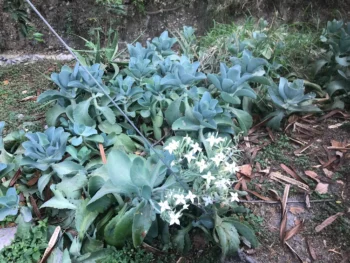
Kalanchoe marmorata: A Spotted Succulent with Marble-Like Beauty
Meet Kalanchoe marmorata, a charming succulent that’s like nature’s own work of art. With leaves that look like they’ve been hand-painted with delicate spots and marbling, this little beauty brings a touch of exotic flair to any garden or windowsill. While it might not be a hometown hero in North American gardens, it’s certainly earned its place in the hearts of succulent enthusiasts worldwide.
What Makes This Succulent Special?
Kalanchoe marmorata is a compact succulent that forms neat rosettes of thick, fleshy leaves adorned with distinctive marbled patterns and spots – hence its species name marmorata, which means marbled. The leaves typically display a blue-green base color decorated with burgundy, purple, or brown markings that create an almost artistic appearance. When mature, it produces clusters of small, tubular flowers that add another layer of interest to this already captivating plant.
Where Does It Come From?
This spotted beauty hails from Somalia and parts of East Africa, where it has adapted to harsh, arid conditions. In its native habitat, it grows in rocky, well-draining soils and has developed excellent drought tolerance as a survival strategy.
Growing Conditions and Care
If you’re thinking about adding Kalanchoe marmorata to your plant family, here’s what you need to know about keeping it happy:
- Light: Prefers bright, indirect light to full sun – too little light can cause the distinctive markings to fade
- Soil: Well-draining soil is absolutely essential – think cactus or succulent potting mix
- Water: Water thoroughly but infrequently, allowing soil to dry completely between waterings
- Temperature: Thrives in USDA zones 9b-11; must be protected from frost
- Humidity: Prefers low humidity environments
Garden Role and Design Ideas
This succulent works wonderfully in several garden settings:
- Container gardens and succulent arrangements
- Rock gardens and xeriscaping projects
- Indoor houseplant collections
- Greenhouse displays
- Desert-themed landscape designs
Its compact size (typically staying under 12 inches tall and wide) makes it perfect for small spaces and detailed plantings where you want every plant to be a showstopper.
Planting and Care Tips
Success with Kalanchoe marmorata comes down to mimicking its natural habitat:
- Plant in spring after the last frost has passed
- Choose containers with drainage holes if growing indoors
- Water deeply but rarely – overwatering is the quickest way to lose this plant
- Bring indoors or provide frost protection in colder climates
- Fertilize sparingly with a diluted succulent fertilizer during growing season
Wildlife and Pollinator Benefits
While not a native species, Kalanchoe marmorata can still provide some benefits to local pollinators when it flowers. Its small tubular blooms attract bees and other small pollinators, though the impact is minimal compared to native alternatives.
Should You Plant It?
Kalanchoe marmorata is a delightful addition to succulent collections and makes an excellent houseplant or greenhouse specimen. While it’s not native to North America, it’s also not considered invasive, making it a relatively safe choice for gardeners who appreciate its unique aesthetic.
However, if you’re focusing on supporting local ecosystems, consider pairing it with or choosing native succulents and drought-tolerant plants that provide similar visual interest while supporting local wildlife. Native sedums, agaves (where hardy), or regional cacti species can offer comparable drought tolerance and unique forms while providing better ecological benefits.
The Bottom Line
Kalanchoe marmorata is like that interesting friend from another country – fascinating, beautiful, and perfectly pleasant to have around, even if they’re not from the neighborhood. Its stunning marbled foliage and easy-care nature make it a worthwhile addition to collections, especially for gardeners who love unique textures and patterns in their plant palette. Just remember to give it the well-draining conditions it craves, and it’ll reward you with its distinctive spotted beauty for years to come.