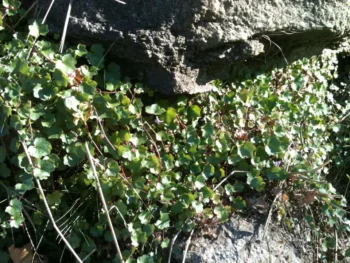
Kenilworth Ivy: A Charming Wall-Hugger for Your Garden
If you’ve ever wandered through an old European village and admired the delicate purple flowers spilling from ancient stone walls, chances are you’ve encountered Kenilworth ivy (Cymbalaria muralis). This petite trailing plant has found its way into gardens across North America, bringing a touch of old-world charm to modern landscapes.
What Exactly Is Kenilworth Ivy?
Don’t let the name fool you – Kenilworth ivy isn’t actually an ivy at all! This annual forb belongs to the snapdragon family and gets its common name from its ivy-like appearance and growth habit. With heart-shaped leaves and tiny snapdragon-like flowers, it’s a plant that knows how to make itself at home in the most unlikely places.
You might also see this plant listed under its botanical synonym, Linaria cymbalaria, in older gardening references.
Where You’ll Find It Growing
Originally from the Mediterranean region, Kenilworth ivy has established itself as a non-native species across much of North America. You can find it growing in an impressive range of locations, from British Columbia down to California, and from the Atlantic provinces all the way to Hawaii. It’s currently established in over 30 states and several Canadian provinces.
- Species observed
- No observations
The Appeal Factor
What makes Kenilworth ivy so endearing? Picture this: cascades of small, heart-shaped leaves dotted with tiny purple flowers that have bright yellow throats. The flowers are only about half an inch long, but what they lack in size, they make up for in charm. The plant blooms from late spring through fall, providing a long season of delicate color.
The trailing habit makes it perfect for:
- Spilling over retaining walls
- Filling gaps in stone work
- Creating living curtains in hanging baskets
- Adding texture to rock gardens
Garden Role and Design Uses
Kenilworth ivy excels as a ground cover and wall plant. It’s particularly valuable in cottage gardens, Mediterranean-style landscapes, and anywhere you want to create that ruins overtaken by nature aesthetic. The plant has a wonderful ability to soften hard edges and bring life to otherwise stark surfaces.
In container gardens, it makes an excellent trailing element, perfect for mixed plantings where you need something to cascade over the edges.
Growing Conditions and Care
One of Kenilworth ivy’s best qualities is its adaptability. This little survivor thrives in USDA hardiness zones 5-9 and isn’t particularly fussy about its growing conditions.
Light requirements: Partial shade to full shade (it actually prefers less sun)
Soil needs: Well-draining soil, tolerates poor soils remarkably well
Water requirements: Moderate moisture, but quite drought-tolerant once established
The plant performs best in cool, moist conditions and can struggle in hot, dry climates. It’s particularly happy growing in the cracks of walls and between stones where it can stay cool and collect moisture.
Planting and Maintenance Tips
Growing Kenilworth ivy is refreshingly straightforward:
- Start from seed in early spring, or look for small plants at specialty nurseries
- Plant in partial to full shade
- Water regularly until established, then let nature take its course
- Deadhead spent flowers if you want to prevent self-seeding
- Trim back aggressive growth to keep it in bounds
Fair warning: this plant is an enthusiastic self-seeder. While some gardeners love this trait, others find it can spread more than desired. Regular trimming before seeds set will help control its wandering ways.
Wildlife and Pollinator Value
The small flowers attract tiny pollinators, including small bees and butterflies. While it’s not a major pollinator magnet like some native species, it does provide nectar during its long blooming period.
Should You Plant It?
Kenilworth ivy occupies an interesting middle ground in the gardening world. As a non-native species that has naturalized widely, it’s not necessarily harmful, but it’s also not providing the same ecological benefits as native plants would.
If you’re drawn to its charm, there’s no reason not to enjoy it in your garden, especially in contained situations like walls or containers where it’s less likely to escape. However, if you’re focused on supporting local ecosystems, consider these native alternatives:
- Wild columbine (Aquilegia canadensis) for similar delicate flowers
- Partridgeberry (Mitchella repens) for trailing ground cover
- Wild ginger (Asarum canadense) for heart-shaped leaves and shade tolerance
The Bottom Line
Kenilworth ivy brings undeniable charm to any garden lucky enough to host it. Whether you’re trying to recreate a European cottage garden feel or simply need something to soften a harsh wall, this little plant delivers. Just remember to keep an eye on its spreading habits, and you’ll have a delightful garden companion that asks for very little while giving quite a lot in return.