Khakiweed: What Every Gardener Should Know About This Uninvited Guest
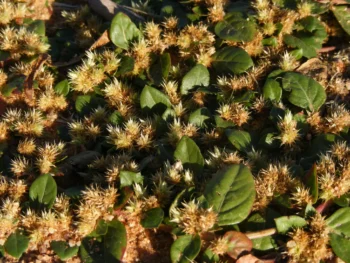
If you’ve noticed a low-growing, mat-forming plant with tiny spiky seed heads popping up uninvited in your garden, you might be dealing with khakiweed (Alternanthera pungens). This South American native has made itself quite at home across the southern United States, and while it’s not necessarily a garden villain, it’s definitely not winning any beauty contests either.
What Exactly Is Khakiweed?
Khakiweed is a perennial forb – essentially a non-woody plant that lacks the substantial stems of shrubs or trees. Think of it as nature’s version of a persistent carpet that nobody ordered. This low-growing plant forms dense mats that can spread surprisingly wide, and while it might look harmless, those tiny flowers pack a punch when it comes to seed production.
You might also encounter this plant under several scientific aliases, including Achyranthes repens or Alternanthera repens, which can make identification a bit tricky if you’re doing your botanical detective work.
Where You’ll Find This Uninvited Guest
Originally from South America, khakiweed has established populations across the southeastern United States and beyond. You’ll find it growing in Alabama, Florida, Georgia, Hawaii, New York, South Carolina, Texas, Virginia, and Puerto Rico. It’s particularly fond of disturbed soils and areas where other plants struggle to establish themselves.
- Species observed
- No observations
Should You Plant Khakiweed? (Spoiler Alert: Probably Not)
Here’s the thing about khakiweed – it’s not really a plant you choose; it’s more like a plant that chooses you. While it’s not classified as officially invasive everywhere it grows, it’s definitely what you’d call an opportunistic spreader. Most gardeners encounter it as an unwelcome volunteer rather than an intentional addition to their landscape.
What Does Khakiweed Actually Look Like?
Don’t expect any Instagram-worthy blooms from this one. Khakiweed produces small, inconspicuous flowers that won’t win any awards for showiness. The plant stays relatively low to the ground, forming dense mats that can smother out more desirable plants. Its leaves are small and oval-shaped, and the overall appearance is, well, weedy.
Growing Conditions (If You’re Stuck With It)
One thing you can say for khakiweed – it’s not picky about where it grows. This resilient little plant thrives in USDA hardiness zones 8-11 and tolerates:
- Poor, compacted soils that other plants reject
- Drought conditions once established
- Full sun to partial shade
- Disturbed areas where competition is minimal
Management and Control
If khakiweed has decided to make your garden its permanent home, you have a few options. Hand-pulling works for small infestations, especially when the soil is moist. For larger areas, you might need to get more aggressive with your management approach. The key is preventing it from going to seed, as those tiny flowers produce lots of seeds that love to travel.
Better Native Alternatives
Instead of letting khakiweed dominate your landscape, consider these native groundcover alternatives that provide much more ecological value:
- Wild ginger for shady areas
- Native sedges for naturalized spaces
- Regional wildflowers that support local pollinators
- Native grasses that provide habitat for beneficial insects
The Bottom Line on Khakiweed
While khakiweed isn’t necessarily the worst plant that could show up in your garden, it’s definitely not the best either. Its main talents seem to be surviving in tough conditions and producing more khakiweed – not exactly the qualities most gardeners are looking for in their landscape plants.
If you’re dealing with khakiweed in your garden, focus on creating conditions that favor more desirable plants. Improve your soil, provide appropriate moisture, and establish native species that can outcompete this persistent spreader. Your local pollinators and wildlife will thank you for choosing plants that actually contribute to the ecosystem rather than just taking up space.