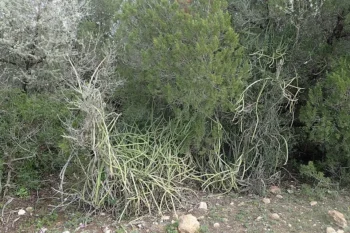
Kleinia anteuphorbium: A Unique Succulent for Warm Climate Gardens
If you’re looking for a conversation starter in your drought-tolerant garden, Kleinia anteuphorbium might just be the quirky plant you never knew you needed. This unusual succulent, also known by its botanical synonym Senecio anteuphorbium, brings an otherworldly charm to landscapes with its distinctive cylindrical stems and cheerful yellow blooms.
What Makes This Plant Special?
Kleinia anteuphorbium is like nature’s version of modern art – it features thick, blue-green stems that grow upright like chunky fingers reaching toward the sky. These fleshy stems store water, making this plant a master of drought survival. Come flowering time, small yellow daisy-like blooms appear at the stem tips, adding unexpected pops of color to what might otherwise look like an alien landscape installation.
Where Does It Come From?
This fascinating succulent calls the Canary Islands home, where it has evolved to thrive in volcanic soils and arid conditions. As an endemic species to this Atlantic archipelago, it’s perfectly adapted to life in challenging, dry environments.
Garden Design Potential
In the right setting, Kleinia anteuphorbium can be an absolute showstopper. It works wonderfully as:
- An architectural accent in modern landscape designs
- A focal point in xeriscaping projects
- Part of a diverse succulent collection
- A container specimen for patios and decks
- An interesting addition to rock gardens
Its unique form pairs beautifully with other drought-tolerant plants and can add vertical interest to low-growing succulent beds.
Growing Conditions and Care
The good news? This plant is refreshingly low-maintenance once you understand its needs. Here’s what it craves:
- Sunlight: Full sun to partial shade
- Soil: Well-draining soil is absolutely essential – think sandy or gravelly
- Water: Drought tolerant once established; water sparingly and let soil dry completely between waterings
- Climate: USDA zones 9-11; not frost hardy
Planting and Care Tips
Getting Kleinia anteuphorbium established is straightforward if you remember the golden rule: less is more, especially when it comes to water. Plant it in spring after any frost danger has passed, and choose a spot with excellent drainage – waterlogged roots are this plant’s nemesis.
During the growing season, water occasionally but deeply, allowing the soil to dry out completely between sessions. In winter, reduce watering even further. If you live in a cooler climate, container growing is your best bet, allowing you to bring the plant indoors when temperatures drop.
Wildlife and Pollinator Benefits
While not as wildlife-friendly as native plants, the small yellow flowers do attract bees and other beneficial insects when in bloom. However, the plant’s main ecological contribution is minimal compared to native species.
Should You Plant It?
Kleinia anteuphorbium can be an interesting addition to warm-climate gardens, particularly if you’re drawn to unusual architectural plants and enjoy experimenting with drought-tolerant species. However, since it’s not native to North America, consider balancing your landscape with native alternatives that provide greater ecological benefits.
Some excellent native alternatives for dry gardens include native sedums, prickly pear cacti (Opuntia species), or native bunch grasses, depending on your region. These plants offer similar drought tolerance while supporting local wildlife and pollinators.
The Bottom Line
Kleinia anteuphorbium is definitely not your grandmother’s garden plant – and that might be exactly what makes it appealing. If you live in a warm climate, have well-draining soil, and enjoy collecting unusual plants, this Canary Island native could find a happy home in your garden. Just remember to pair it with native plants to create a landscape that’s both interesting and ecologically beneficial.