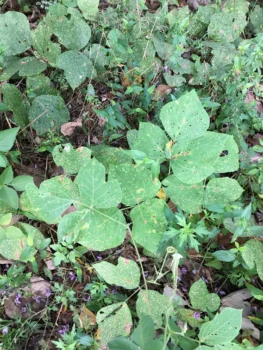
Kudzu: The Invasive Vine You Should Never Plant
If you’ve ever driven through the southeastern United States, you’ve likely seen kudzu – that green blanket that seems to swallow everything in its path. Known scientifically as Pueraria montana var. lobata, this vigorous vine might look impressive, but it’s one plant you definitely don’t want anywhere near your garden.
What Is Kudzu?
Kudzu is a perennial climbing vine that belongs to the legume family. This twining plant can grow both woody and herbaceous stems that seem to have no limits when it comes to spreading. While it produces attractive purple, fragrant flower clusters in late summer and has distinctive three-leaflet leaves, don’t let its beauty fool you – this is one of America’s most notorious invasive plants.
Where Did It Come From and Where Is It Now?
Originally native to East Asia, kudzu was introduced to the United States in the late 1800s and was even promoted by the government for erosion control in the mid-1900s. That seemed like a good idea at the time, but it turned out to be an ecological disaster.
Today, this invasive species has established itself across much of the country, including Alabama, Arkansas, Connecticut, Delaware, District of Columbia, Florida, Georgia, Hawaii, Illinois, Indiana, Kansas, Kentucky, Louisiana, Maryland, Massachusetts, Mississippi, Missouri, Nebraska, New Jersey, New York, North Carolina, Ohio, Oklahoma, Oregon, Pennsylvania, South Carolina, Tennessee, Texas, Virginia, Washington, West Virginia, and even territories like Guam and Palau.
- Species observed
- No observations
Why You Should Never Plant Kudzu
Kudzu is classified as a Category 1 invasive species in Alabama and appears on Michigan’s Watch List – and for good reason. Here’s why this plant is such a problem:
- Aggressive growth: Kudzu can grow up to a foot per day during peak growing season
- Smothers native vegetation: It climbs over and kills trees, shrubs, and native plants by blocking their sunlight
- Difficult to control: The extensive root system makes it extremely hard to eliminate once established
- Economic damage: Causes millions of dollars in damage to forestry and agriculture annually
- Ecosystem disruption: Displaces native plants that wildlife depend on for food and habitat
Growing Conditions (For Identification Purposes Only)
Understanding where kudzu thrives can help you identify and avoid it. This invasive vine is unfortunately very adaptable and grows in USDA hardiness zones 4-10. It tolerates:
- Full sun to partial shade
- Poor, disturbed soils
- Drought conditions once established
- Various soil types and pH levels
This adaptability is exactly what makes it so problematic – there are few places where it can’t establish itself.
What About Pollinators?
While kudzu’s purple flowers do attract bees and other pollinators, this doesn’t justify planting it. There are countless native alternatives that provide much better, more sustainable pollinator habitat without the devastating ecological consequences.
Better Alternatives for Your Garden
If you’re looking for a climbing vine or ground cover, consider these native alternatives instead:
- American groundnut (Apios americana): A native climbing vine with fragrant flowers
- Wild bergamot (Monarda fistulosa): Great for pollinators and has a lovely fragrance
- Native honeysuckles: Such as coral honeysuckle (Lonicera sempervirens)
- Wild ginger: For shaded ground cover areas
What If You Already Have Kudzu?
If you discover kudzu on your property, act quickly. Small infestations are much easier to manage than established ones. Contact your local extension office or invasive species management group for guidance on safe, effective removal methods. Remember, simply cutting the vines isn’t enough – the root system must be addressed to prevent regrowth.
The Bottom Line
While kudzu might seem like an easy, fast-growing solution for covering an unsightly area, it’s a choice you’ll regret. This invasive vine doesn’t just stay where you plant it – it spreads aggressively and can cause serious ecological and economic damage. Do your local ecosystem a favor and choose native plants instead. Your garden, your neighbors, and your local wildlife will thank you for it.