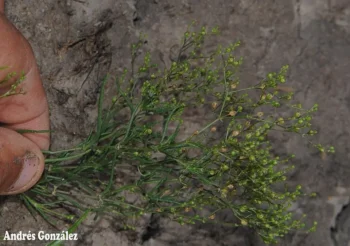
La Plata Sandspurry: A Tiny Ground Cover for Challenging Spots
Meet La Plata sandspurry (Spergularia platensis), a small but mighty little plant that’s found its way into some pretty specific corners of the American landscape. This annual forb might not win any beauty contests, but it’s got some interesting tricks up its sleeve that make it worth knowing about.
What Exactly Is La Plata Sandspurry?
La Plata sandspurry is a low-growing annual plant that forms small mats along the ground. As a forb, it’s essentially an herbaceous flowering plant without woody stems—think of it as nature’s version of a living carpet. Originally from South America, this little traveler has made itself at home in parts of California and Texas, where it reproduces on its own without any help from gardeners.
- Species observed
- No observations
The Good, The Bad, and The Salty
Here’s where things get interesting: La Plata sandspurry has a superpower that most plants would envy—it absolutely loves salty, wet conditions that would make other plants throw in the towel. This makes it both a potential solution and a potential concern, depending on your perspective.
Reasons you might want it:
- Thrives in saline soils where other plants struggle
- Excellent for wet, challenging areas
- Low maintenance once established
- Provides ground cover in difficult spots
Reasons to think twice:
- It’s not native to North America
- Can spread readily in suitable conditions
- Limited ornamental value
- May outcompete native plants in wetland areas
Where Does It Like to Live?
La Plata sandspurry is quite particular about its living arrangements. In the Arid West, it’s considered an obligate wetland plant—meaning it almost always needs wet conditions to survive. However, in the Atlantic and Gulf Coastal Plains and Great Plains regions, it’s more flexible and can handle some drier periods.
The plant typically grows 2-6 inches tall and spreads to form small colonies. Its tiny white to pinkish flowers might attract some small pollinators, though it’s not going to be a butterfly magnet by any means.
Growing Conditions and Care
If you’re dealing with a challenging wet, salty area and considering La Plata sandspurry, here’s what it needs:
- Soil: Tolerates and even prefers saline conditions
- Water: Consistently moist to wet soil
- Sun: Full sun to partial shade
- Climate: Generally suitable for USDA zones 8-11
- Maintenance: Minimal once established
As an annual, it completes its entire life cycle in one growing season, so you’ll see new plants appearing each year if conditions remain favorable.
A Word of Caution and Better Alternatives
While La Plata sandspurry isn’t currently listed as invasive, it’s worth remembering that non-native plants can sometimes become problematic over time. Before planting it, consider whether there might be native alternatives that could serve the same purpose in your landscape.
For wet, salty conditions, you might explore native options like saltgrass (Distichlis spicata), alkali sacaton (Sporobolus airoides), or various native sedges, depending on your specific region. These plants will provide similar ground cover benefits while supporting local ecosystems and wildlife.
The Bottom Line
La Plata sandspurry is one of those plants that fills a very specific niche. If you have a persistently wet, salty area where nothing else will grow, it might solve your problem. However, given its non-native status and the availability of native alternatives, it’s worth doing a bit more research before adding it to your landscape. When in doubt, consult with your local native plant society or extension office—they’ll know what works best in your specific area and can point you toward native plants that might be even better suited to your needs.