Lamarck’s Bedstraw: A Delicate Annual with a Spreading Habit
If you’ve ever encountered a delicate, sprawling plant with tiny white flowers scattered throughout your garden, you might have met Lamarck’s bedstraw (Galium divaricatum). This unassuming annual has quietly made itself at home across much of the United States, though it’s not originally from here. Let’s dive into what makes this little plant tick and whether it deserves a spot in your garden plans.
What Exactly is Lamarck’s Bedstraw?
Lamarck’s bedstraw is a small annual forb – essentially a non-woody flowering plant that completes its entire life cycle in one growing season. Originally hailing from the Mediterranean region and parts of Europe, this plant has established itself across a surprisingly wide range of American states. You might also see it listed under various scientific synonyms, including Galium anglicum or Galium parvifolium, which can make identification a bit tricky for plant enthusiasts.
Where You’ll Find It Growing
This adaptable little plant has spread across an impressive range of states, from the sunny shores of Hawaii to the mountains of Vermont. You can currently find Lamarck’s bedstraw growing in Alabama, Arkansas, California, Georgia, Hawaii, Indiana, Kentucky, Louisiana, Mississippi, Missouri, North Carolina, Oregon, Tennessee, Vermont, Virginia, and West Virginia. It’s quite the traveler!
- Species observed
- No observations
The Not-So-Native Truth
Here’s where things get a bit complicated. Lamarck’s bedstraw isn’t native to North America – it’s what botanists call a naturalized species. This means it was introduced from elsewhere but has successfully established self-sustaining populations without human help. The good news? It’s not currently listed as invasive or noxious, so it’s not considered a major ecological threat.
What Does It Look Like?
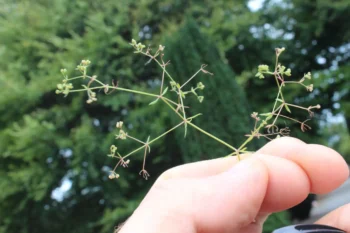
Lamarck’s bedstraw won’t win any awards for showiness, but it has its own quiet charm. The plant produces clusters of tiny white flowers that seem to float above delicate, branching stems. Its fine-textured foliage creates an airy, almost ethereal appearance in the garden. Don’t expect dramatic height – this is a low-growing plant that tends to spread rather than reach skyward.
Garden Role and Landscape Use
If you’re looking for a formal, manicured garden specimen, Lamarck’s bedstraw probably isn’t your plant. However, it can play a useful role in more naturalized settings:
- Ground cover in informal areas
- Gap-filler in wild or meadow gardens
- Addition to Mediterranean-style landscapes
- Component of naturalized plantings
Growing Conditions and Care
One of Lamarck’s bedstraw’s strongest qualities is its adaptability. This plant is remarkably unfussy about growing conditions and can thrive in USDA hardiness zones 6-10. It prefers well-drained soils and can handle drought conditions once established, making it a good choice for low-water gardens.
The plant’s wetland status varies by region, but generally falls into the facultative category, meaning it can grow in both wet and dry conditions. In western regions, it leans more toward upland (drier) sites.
The Pollinator Connection
While Lamarck’s bedstraw may not be a pollinator powerhouse, its small white flowers do attract various small insects. The tiny blooms provide nectar and pollen resources, particularly for smaller beneficial insects that might be overlooked by showier flowers.
Planting and Maintenance Tips
If you decide to work with Lamarck’s bedstraw, here’s what you need to know:
- Seeds readily self-sow, so expect it to spread
- Requires minimal care once established
- Thrives in poor to average soils
- Benefits from occasional weeding around young plants
- May need management to prevent excessive spread
Should You Plant It?
This is where personal preference and garden philosophy come into play. Lamarck’s bedstraw isn’t going to harm your local ecosystem, but it’s also not providing the same benefits as native alternatives. If you’re focused on supporting local wildlife and ecosystems, you might consider native bedstraws or other indigenous ground covers instead.
However, if you have a challenging spot where few other plants thrive, or if you’re creating a Mediterranean-themed garden, Lamarck’s bedstraw could earn its keep. Just be prepared for its self-seeding habits and keep an eye on its spread.
Native Alternatives to Consider
If you like the idea of bedstraw but want to go native, look into indigenous Galium species in your area. Many regions have native bedstraws that offer similar aesthetic qualities while providing better support for local wildlife. Your local native plant society or extension office can help you identify the best options for your specific location.
Lamarck’s bedstraw represents one of those garden gray areas – not harmful, not spectacular, but potentially useful in the right situation. Whether it finds a place in your garden depends on your priorities and growing conditions. Just remember that in the plant world, sometimes the quiet, unassuming species can surprise you with their resilience and subtle beauty.