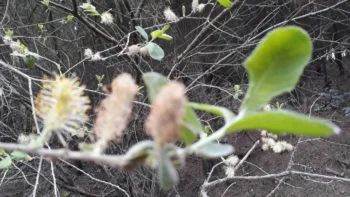
Large Gray Willow: A Fast-Growing Solution for Wet Spots
If you’ve got a soggy spot in your yard that seems impossible to plant, the large gray willow (Salix cinerea) might catch your attention. This fast-growing shrub thrives where many other plants would throw in the towel, making it a go-to choice for gardeners dealing with wet, poorly-drained areas.
What Is Large Gray Willow?
Large gray willow is a perennial, multi-stemmed woody shrub that typically reaches 13-16 feet in height, though it can grow taller under the right conditions. True to its name, this willow sports gray-green leaves with distinctive silvery undersides that shimmer in the breeze. In early spring, before the leaves emerge, cheerful yellow-green catkins appear, adding a pop of color to the still-dormant landscape.
This plant goes by the botanical name Salix cinerea, and you might occasionally see it listed under the synonym Salix cinerea L. ssp. cinerea. It’s a member of the dicot plant group and has earned its place in many North American gardens despite being a non-native species.
Where Does It Come From and Where Does It Grow?
Originally hailing from Europe and western Asia, large gray willow has made itself quite at home across much of North America. It now grows wild in states from Maine down to Georgia, west to Wisconsin and Utah, and even up into Canadian provinces like Ontario and Nova Scotia. The plant has naturalized so well that it reproduces on its own without any help from gardeners.
- Species observed
- No observations
Is It Right for Your Garden?
Here’s where things get interesting. Large gray willow falls into that facultative wetland category, which is a fancy way of saying it usually loves wet feet but can tolerate drier conditions if needed. This makes it incredibly versatile for problem areas in your landscape.
Consider large gray willow if you have:
- Consistently wet or boggy areas
- Spots with poor drainage
- Rain gardens that need screening plants
- Areas prone to seasonal flooding
- Slopes that need erosion control
The plant works beautifully in naturalized landscapes and can provide excellent screening, though its fast growth means you’ll need to stay on top of pruning to keep it in bounds.
Pollinator and Wildlife Benefits
One of the best things about large gray willow is its timing. Those early spring catkins appear when pollinators are just waking up and desperately need food sources. Bees and other beneficial insects flock to the flowers for nectar and pollen, making this shrub a valuable early-season pollinator plant.
Growing Conditions and Care
Large gray willow is remarkably easy-going when it comes to growing conditions. It thrives in USDA hardiness zones 4-8, handling everything from full sun to partial shade. The key to success is moisture – this plant genuinely loves wet soil and can handle conditions that would drown many other shrubs.
For best results:
- Plant in consistently moist to wet soil
- Choose a location with full sun to partial shade
- Don’t worry about soil quality – it tolerates poor soils well
- Prune in late winter or early spring before new growth begins
- Be prepared for fast growth and regular maintenance pruning
A Word About Native Alternatives
While large gray willow can be a useful plant for challenging wet sites, it’s worth considering native willow species that might serve the same purpose. Native willows like pussy willow (Salix discolor) or black willow (Salix nigra) offer similar benefits while supporting local ecosystems more effectively. These native alternatives provide the same early pollinator benefits and wet-site tolerance while being better integrated into your local food web.
The Bottom Line
Large gray willow can be a practical solution for wet, difficult-to-plant areas where you need fast-growing screening or erosion control. Its early spring flowers provide valuable pollinator resources, and its tolerance for soggy conditions is genuinely impressive. Just remember that this vigorous grower will need regular attention to keep it from taking over, and consider exploring native willow alternatives that might serve your garden – and local wildlife – even better.
Whether you choose large gray willow or a native alternative, you’ll be adding valuable early-season pollinator habitat to your landscape while solving that tricky wet-spot problem that’s been plaguing your garden plans.