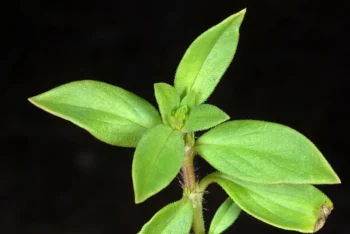
Largeflower Mexican Clover: A Ground-Hugging Wildflower Worth Knowing
If you’ve ever spotted a carpet of tiny white or pink flowers spreading across disturbed ground in Florida, you might have encountered largeflower Mexican clover (Richardia grandiflora). This little ground-hugger has quite the story to tell, and whether it belongs in your garden depends on what you’re looking for in a landscape plant.
What Exactly Is Largeflower Mexican Clover?
Despite its common name, largeflower Mexican clover isn’t actually a true clover at all. This low-growing forb is a member of the coffee family (Rubiaceae) and gets its clover nickname from its three-part leaves that somewhat resemble those of actual clovers. The plant forms spreading mats that rarely grow more than a few inches tall, making it a natural ground cover.
As a forb, Richardia grandiflora lacks any significant woody tissue and keeps its growing points at or below ground level. It can behave as either an annual or short-lived perennial, depending on growing conditions and climate.
Native Status and Where You’ll Find It
Here’s where things get interesting: largeflower Mexican clover isn’t actually native to the United States. This plant originally hails from tropical and subtropical regions of Central and South America but has established itself as a naturalized resident in Florida, where it reproduces on its own and persists in the wild.
- Species observed
- No observations
In Florida’s warm climate, you’ll typically find this plant growing in disturbed soils, along roadsides, in vacant lots, and other areas where the ground has been disrupted. It’s particularly fond of sandy soils and can handle both full sun and partial shade conditions.
Garden Appeal and Landscape Role
If you’re drawn to informal, naturalized garden styles, largeflower Mexican clover has some appealing qualities. Its small, clustered flowers create a delicate carpet effect, and the plant serves as an excellent living mulch that can suppress weeds while filling in bare spots. The flowers, typically white to pale pink, attract small pollinators including native bees and butterflies.
However, this isn’t a plant for formal landscapes or carefully manicured gardens. Its spreading habit and self-seeding nature mean it tends to pop up wherever conditions suit it, rather than staying put where you planted it.
Growing Conditions and Care
One of the most appealing aspects of largeflower Mexican clover is how easy it is to grow – perhaps too easy! Here’s what it prefers:
- Light: Full sun to partial shade
- Soil: Well-draining soils, particularly sandy types
- Water: Drought tolerant once established, but appreciates occasional watering
- Climate: Thrives in USDA zones 8-11
- Maintenance: Virtually none required
This plant is remarkably adaptable and can handle poor soils, drought, and neglect better than many garden favorites. It often establishes itself through self-seeding, so you might find it appearing in your garden even if you didn’t plant it there.
Should You Plant It?
This is where gardeners need to think carefully. While largeflower Mexican clover isn’t currently listed as invasive or noxious, its non-native status and tendency to spread readily mean it’s worth approaching with caution. If you’re interested in naturalized ground covers, you might want to consider native alternatives that provide similar benefits without the uncertainty.
Some excellent native ground cover options for Florida gardeners include:
- Sunshine mimosa (Mimosa strigillosa)
- Beach sunflower (Helianthus debilis)
- Partridge pea (Chamaecrista fasciculata)
These native plants offer similar low-maintenance ground cover qualities while supporting local ecosystems and wildlife in ways that non-native plants simply cannot match.
The Bottom Line
Largeflower Mexican clover is an interesting plant that has found a niche in Florida’s landscape. While it offers some appealing qualities as a low-maintenance ground cover and pollinator plant, its non-native status suggests that gardeners committed to supporting local ecosystems might want to explore native alternatives first. If you do encounter this plant in your garden, you’ll know you’re looking at a resilient little survivor that’s made itself at home far from its original tropical homeland.