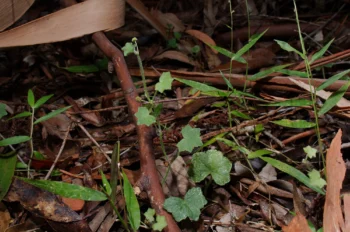
Largeleaf Marshpennywort: A Water-Loving Groundcover for Moist Gardens
If you’re looking for a low-maintenance groundcover that thrives in consistently moist conditions, largeleaf marshpennywort (Hydrocotyle bowlesioides) might catch your attention. This perennial herb has found its way into gardens across the southeastern United States and Hawaii, though it’s not originally from North America.
What is Largeleaf Marshpennywort?
Largeleaf marshpennywort is a non-woody perennial plant that belongs to the forb family. Unlike shrubs or trees, it lacks significant woody tissue and keeps its growing points at or below ground level. This Asian native has established itself as a naturalized species in parts of the United States, reproducing on its own without human intervention.
You might also see this plant listed under its botanical synonym, Hydrocotyle sibthorpioides var. oedipoda, in older gardening references.
Where Does It Grow?
Currently, largeleaf marshpennywort has established populations in Georgia, Louisiana, and Hawaii. Its presence in these diverse climates shows its adaptability to different conditions, though it consistently prefers areas with reliable moisture.
- Species observed
- No observations
Growing Conditions and Care
This water-loving plant is surprisingly easy to grow if you can meet its basic needs:
- Moisture: Thrives in consistently moist to wet soil conditions
- Light: Tolerates both partial shade and full sun
- Hardiness: Best suited for USDA zones 8-11
- Soil type: Adaptable to various soil types as long as moisture is consistent
The plant has a facultative wetland status, meaning it can grow in both wetland and non-wetland conditions, though it clearly prefers the wetter side of things.
Landscape Uses and Design Role
Largeleaf marshpennywort works well as a groundcover in several garden situations:
- Water garden edges and bog gardens
- Areas with poor drainage where other plants struggle
- Filling gaps in moisture-loving plant collections
- Low-maintenance areas that need consistent coverage
Its small, rounded to kidney-shaped leaves create a delicate, fine-textured appearance that contrasts nicely with larger-leafed moisture-loving plants.
Wildlife and Pollinator Value
While largeleaf marshpennywort produces small flowers, they’re quite inconspicuous and provide minimal value to pollinators. The wildlife benefits of this plant are not well-documented, suggesting it’s more of a utility plant than a wildlife magnet.
Should You Plant It?
Largeleaf marshpennywort can be a practical choice for gardeners dealing with consistently wet areas where other groundcovers fail. However, since it’s not native to North America, consider these native alternatives that provide similar coverage with greater ecological benefits:
- Wild ginger (Asarum canadense) for shaded wet areas
- Creeping Jenny (Lysimachia nummularia) – though also non-native, it’s widely naturalized
- Native sedges like Pennsylvania sedge (Carex pensylvanica) for varying moisture conditions
If you do choose to grow largeleaf marshpennywort, monitor its spread since it reproduces readily and could potentially outcompete native plants in natural areas adjacent to your garden.
The Bottom Line
Largeleaf marshpennywort fills a specific niche for gardeners needing reliable groundcover in wet conditions. While it’s not problematic enough to avoid entirely, exploring native alternatives first will give you plants better suited to support local ecosystems while solving your groundcover challenges.