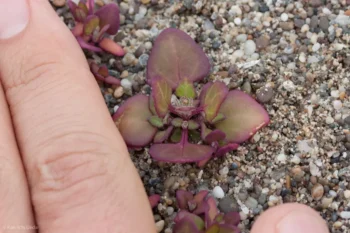
Largeseed Goosefoot: An Underappreciated Annual for Edible Landscapes
Meet largeseed goosefoot (Chenopodium macrospermum), a somewhat mysterious member of the goosefoot family that’s been quietly growing in scattered locations across North America. While it may not win any beauty contests, this humble annual forb has some interesting qualities that might just earn it a spot in your garden—if you’re the adventurous type.
What Exactly Is Largeseed Goosefoot?
Largeseed goosefoot is an annual forb, which is just a fancy way of saying it’s a non-woody plant that completes its entire life cycle in one growing season. True to its name, this plant produces notably large seeds compared to its goosefoot relatives. Like other members of the Chenopodium family, it’s more functional than flashy—think of it as the reliable pickup truck of the plant world.
Where Does It Grow?
Currently, largeseed goosefoot can be found growing in British Columbia, California, Maryland, and North Carolina. However, there’s a bit of botanical intrigue here—this species is considered non-native in Canada where it has naturalized, while its status in the lower 48 states remains undefined. It’s one of those plants that keeps botanists scratching their heads about its true origins.
- Species observed
- No observations
The Wetland Connection
Here’s where things get interesting: largeseed goosefoot has a consistent Facultative Wetland status across multiple regions, from the Arid West to the Atlantic Coast. This means it usually hangs out in wetland areas but isn’t picky enough to turn down a nice upland spot if the conditions are right. It’s basically the plant equivalent of someone who prefers the beach but won’t say no to a mountain cabin.
Should You Grow It?
The honest answer? It depends on what you’re after. Largeseed goosefoot isn’t going to win any garden beauty awards—it’s not grown for showy flowers or stunning foliage. However, if you’re interested in:
- Edible landscaping and seed production
- Wildlife food plots (the seeds can feed birds)
- Low-maintenance annual crops
- Plants that tolerate wet conditions
Then this might be worth considering. Just keep in mind that since it’s non-native in many areas, you might want to explore native alternatives first.
Native Alternatives to Consider
Before planting largeseed goosefoot, consider these native options that provide similar benefits:
- Lamb’s quarters (Chenopodium album) – though check local native status
- Wild quinoa species native to your region
- Native amaranth species (Amaranthus spp.)
- Local native seed-producing annuals
Growing Largeseed Goosefoot
If you decide to give largeseed goosefoot a try, you’ll find it refreshingly easy to grow. As an annual, it completes its life cycle in one season and often self-seeds for the following year. It adapts well to various soil conditions and seems to have a particular fondness for moist areas, given its wetland preferences.
The plant tolerates a wide range of growing conditions and doesn’t demand much fussing—just plant it, give it some water, and let it do its thing. Since specific growing information for this species is limited, treat it similarly to other goosefoot family members: full sun, moderate water, and decent drainage.
The Bottom Line
Largeseed goosefoot is one of those plants that’s more interesting than beautiful, more functional than fancy. It’s not going to be the star of your ornamental garden, but it could have a place in edible landscapes or naturalized areas where you want low-maintenance seed production. Given its non-native status in many areas, though, it’s worth exploring native alternatives first—your local ecosystem will thank you for it.
Remember, the best garden is one that works with nature rather than against it, and that usually means starting with plants that naturally belong in your corner of the world.