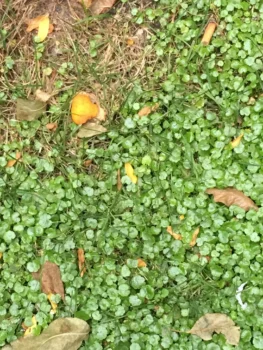
Lawn Marshpennywort: A Small Ground Cover with Big Considerations
If you’ve ever noticed tiny, round leaves carpeting moist areas of your garden or lawn, you might have encountered lawn marshpennywort (Hydrocotyle sibthorpioides). This diminutive perennial has quietly made itself at home across much of the United States, despite its origins far from American shores.
What Is Lawn Marshpennywort?
Lawn marshpennywort is a small, creeping forb that belongs to the carrot family. Don’t let the family connection fool you though – this little plant won’t be gracing your dinner table anytime soon! Instead, it’s classified as a forb, which simply means it’s a non-woody plant that stays low to the ground and doesn’t develop thick, tree-like stems.
As a perennial, lawn marshpennywort returns year after year, spreading slowly but steadily through moist areas. Its scientific name, Hydrocotyle sibthorpioides, might be a mouthful, but you might also see it referred to by its synonym, Hydrocotyle rotundifolia.
Where You’ll Find It
Originally from Asia, lawn marshpennywort has established itself across a surprising number of American states. You can find it thriving everywhere from Arkansas to Virginia, and from California to Hawaii. It’s particularly common in the southeastern states, where the warm, humid conditions suit its preferences perfectly.
- Species observed
- No observations
The Native Plant Consideration
Here’s where things get interesting from a native gardening perspective. Lawn marshpennywort is what botanists call a naturalized species – it arrived from somewhere else but has been reproducing and spreading on its own without human help. While it’s not currently listed as invasive or noxious, its non-native status gives us pause as gardeners who care about supporting local ecosystems.
If you’re committed to native-only gardening, you might want to explore indigenous alternatives that provide similar ground cover benefits while supporting local wildlife.
Growing Conditions and Care
If you do choose to work with lawn marshpennywort (or if it’s already established in your garden), here’s what you need to know about keeping it happy:
Preferred Growing Conditions
- Moist to wet soils – this plant loves its feet wet!
- Partial shade to full sun exposure
- Poor drainage is actually a plus
- USDA hardiness zones 7-10
Wetland Preferences
Lawn marshpennywort has earned a Facultative Wetland status in most regions, meaning it usually prefers wetland conditions but can tolerate drier spots when needed. In some areas like Hawaii and the Midwest, it’s even more flexible, earning a Facultative rating that means it’s equally comfortable in wet or dry conditions.
Aesthetic Appeal and Garden Role
Let’s be honest – lawn marshpennywort isn’t going to win any beauty contests. Its charm lies in its simplicity: small, perfectly round leaves that create a delicate, textured carpet in moist garden areas. The tiny white to greenish flowers are barely noticeable, appearing in small clusters that won’t make much of a visual impact.
Where this plant shines is as a utilitarian ground cover. It’s particularly useful for:
- Filling in boggy areas where other plants struggle
- Naturalizing informal garden spaces
- Covering soil around pond margins
- Creating low-maintenance ground cover in consistently moist areas
The Bottom Line
Lawn marshpennywort is one of those plants that’s neither hero nor villain in the garden world. It quietly does its job as a ground cover without causing major problems, but it also doesn’t offer significant benefits to native wildlife or pollinators. If you’re looking for a low-maintenance option for wet areas and don’t mind working with non-native species, it can serve a purpose.
However, if you’re passionate about supporting native ecosystems, consider exploring indigenous alternatives that provide similar ground cover benefits while offering food and habitat for local wildlife. Your local native plant society can help you identify marsh and wetland plants native to your specific region that might serve the same purpose with greater ecological benefits.
Remember, every garden is different, and every gardener has different goals. Whether you choose to embrace, remove, or simply coexist with lawn marshpennywort, the most important thing is making informed decisions that align with your gardening values and local ecosystem needs.