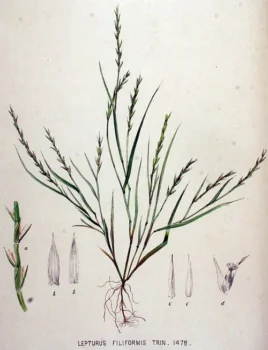
Lepturus filiformis: A Delicate Thread Grass for Specialized Gardens
Meet Lepturus filiformis, a grass so slender it practically whispers its presence in the garden. This thread-like annual grass might not win any beauty contests, but it has carved out its own special niche in the world of specialized landscaping. If you’re wondering whether this understated grass deserves a spot in your garden, let’s dive into what makes this Mediterranean native tick.
What’s in a Name?
Lepturus filiformis goes by its scientific name most of the time, as common names for this species are rarely used. You might occasionally see it listed under its botanical synonym, Parapholis filiformis, but they’re the same plant. The name filiformis literally means thread-like, which perfectly describes its ultra-thin appearance.
Where Does It Come From?
This modest grass calls the Mediterranean region home, naturally occurring across parts of Europe, North Africa, and western Asia. It’s particularly fond of coastal areas where salt spray and sandy soils create challenging growing conditions that would make other plants throw in the trowel.
The Look and Feel
Don’t expect this grass to make a bold statement in your landscape. Lepturus filiformis is the epitome of understated elegance—if you can call something so humble elegant. It grows as a small annual with extremely narrow, thread-like leaves and stems that barely register on the visual radar. The flowers are tiny and inconspicuous, appearing in slender spikes that blend seamlessly with the foliage.
Garden Role and Design Potential
This isn’t your typical ornamental grass. Lepturus filiformis works best in specialized situations where its unique characteristics shine:
- Coastal gardens where salt tolerance is crucial
- Xerophytic or drought-tolerant landscapes
- Naturalized areas mimicking Mediterranean habitats
- Rock gardens with sandy, well-draining soil
Think of it as a supporting actor rather than the star of the show—it adds texture and fills gaps without overwhelming its neighbors.
Growing Conditions and Care
If you’re in USDA hardiness zones 8-10, you might be able to grow this Mediterranean native successfully. Here’s what it needs to thrive:
- Soil: Sandy, well-draining soil is essential—this grass hates wet feet
- Water: Drought-tolerant once established; minimal supplemental watering needed
- Sun: Full sun exposure
- Salt: Excellent salt tolerance makes it perfect for coastal conditions
Planting and Maintenance Tips
The good news? Lepturus filiformis is refreshingly low-maintenance. As an annual, it completes its life cycle in one growing season and often self-seeds for the following year. Simply scatter seeds in late fall or early spring in your chosen location, and let nature take its course. The main care required is resisting the urge to overwater or overfertilize—this grass prefers the lean life.
Wildlife and Pollinator Value
As a wind-pollinated grass, Lepturus filiformis doesn’t offer much in the way of nectar or pollen for bees and butterflies. However, like many grasses, it may provide some habitat value for small insects and could offer seeds for granivorous birds, though this benefit is modest given its small size.
Should You Plant It?
Here’s the honest truth: unless you have very specific growing conditions or are creating a Mediterranean-themed garden, you probably don’t need Lepturus filiformis. It’s not invasive or problematic, but it’s also not particularly showy or beneficial for most North American gardens.
If you’re drawn to its specialized nature and have the right coastal or drought-prone conditions, go ahead and experiment with it. However, if you’re looking for native alternatives that offer similar drought tolerance and low maintenance, consider these options instead:
- Native bunch grasses like Little Bluestem (Schizachyrium scoparium)
- Buffalo Grass (Poaceae dactyloides) for western regions
- Regional native sedges for areas needing fine-textured groundcover
Remember, native plants will always provide better support for local wildlife and are adapted to your specific regional conditions. While Lepturus filiformis isn’t harmful to grow, choosing native alternatives is usually the better ecological choice for most gardeners.