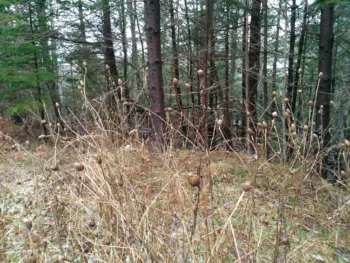
Lesser Knapweed: A Beautiful but Problematic Non-Native Plant
If you’ve ever spotted purple-pink thistle-like flowers blooming along roadsides or in disturbed areas during late summer, you might have encountered lesser knapweed (Centaurea nigra). While this perennial forb can certainly catch the eye with its vibrant blooms, there’s more to this plant than meets the eye – and not all of it is good news for North American gardeners.
What Is Lesser Knapweed?
Lesser knapweed is a non-native perennial plant that originally hails from Europe, particularly the Mediterranean region and temperate European areas. As a forb – meaning it’s a vascular plant without significant woody tissue – this hardy perennial can persist for many years once established. The plant produces distinctive purple-pink flowers that bloom from June through September, creating quite a colorful display during the later growing season.
Where You’ll Find It
This European transplant has made itself quite at home across North America. You can find lesser knapweed established in numerous states and provinces, including New Brunswick, California, Nova Scotia, Ontario, Prince Edward Island, Connecticut, Quebec, Delaware, District of Columbia, Idaho, Illinois, Indiana, Iowa, Kentucky, Maine, Maryland, Massachusetts, Michigan, Missouri, Montana, New Hampshire, New Jersey, New York, North Carolina, Ohio, Oregon, Pennsylvania, Rhode Island, Vermont, Virginia, Washington, West Virginia, Wisconsin, and Newfoundland.
- Species observed
- No observations
The Invasive Reality
Here’s where things get complicated: lesser knapweed isn’t just a harmless pretty face. This plant has earned invasive status in several regions, with Wisconsin classifying it as Restricted. What does this mean? Simply put, lesser knapweed reproduces spontaneously in the wild without human help and tends to persist and spread, potentially crowding out native plants that our local wildlife depends on.
As a responsible gardener, it’s important to understand that introducing or encouraging invasive plants can have unintended consequences for local ecosystems. While the purple blooms might attract pollinators like bees and butterflies, the plant’s aggressive nature means it can outcompete native species that provide more comprehensive benefits to local wildlife.
Growing Conditions and Characteristics
If you’re curious about why lesser knapweed has been so successful at establishing itself, it’s partly due to its hardy nature and adaptable growing requirements:
- Thrives in USDA hardiness zones 3-9
- Tolerates full sun to partial shade conditions
- Adapts to poor soils where other plants might struggle
- Becomes drought tolerant once established
- Requires minimal maintenance to survive
- Self-seeds readily, contributing to its spread
Why You Shouldn’t Plant It
While lesser knapweed might seem like an easy, low-maintenance option for difficult spots in your garden, we strongly recommend against intentionally planting it. Here’s why:
- Its invasive status means it can escape cultivation and harm local ecosystems
- It may crowd out beneficial native plants
- Once established, it can be difficult to control or remove
- Some regions have restrictions on its cultivation
Better Native Alternatives
Instead of taking a chance with lesser knapweed, consider these native alternatives that can provide similar aesthetic appeal while supporting local wildlife:
- Wild bergamot (Monarda fistulosa) – offers purple flowers and attracts pollinators
- Purple coneflower (Echinacea purpurea) – provides long-lasting purple blooms
- New England aster (Symphyotrichum novae-angliae) – delivers late-season purple flowers
- Blazing star species (Liatris spp.) – offers spiky purple flower heads
The Bottom Line
While lesser knapweed might seem tempting with its hardy nature and attractive flowers, its invasive tendencies make it a poor choice for responsible gardening. By choosing native alternatives instead, you’ll create a garden that’s not only beautiful but also beneficial to local wildlife and ecosystems. Remember, the best gardens work with nature, not against it – and that means saying no to invasive species, even the pretty ones!