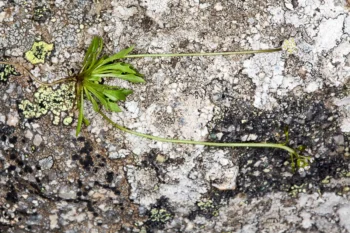
Lesser Shepherdscress: A Small but Mighty Mediterranean Annual
If you’ve ever wandered through a California garden and spotted tiny white flowers clustered on low-growing plants, you might have encountered lesser shepherdscress (Teesdalia coronopifolia). This diminutive annual has quietly made itself at home in the Golden State, though it originally hails from much farther away.
What is Lesser Shepherdscress?
Lesser shepherdscress is a small annual forb—basically a non-woody herbaceous plant that completes its entire life cycle in one growing season. Don’t let the lesser in its name fool you; this little plant packs quite a bit of character into its compact form. It’s also known by its scientific name Teesdalia coronopifolia, and you might occasionally see it listed under its synonym Thlaspi coronopifolia.
Where Does It Come From and Where Does It Grow?
Originally from the Mediterranean region and parts of Europe, lesser shepherdscress is considered a non-native species in North America. In the United States, it has established itself primarily in California, where it reproduces on its own and tends to persist in the wild.
- Species observed
- No observations
What Does It Look Like?
Lesser shepherdscress forms small rosettes of deeply divided leaves that somewhat resemble tiny fern fronds. The plant stays quite low to the ground, making it an interesting textural element in the garden. Come flowering time, it produces clusters of small white flowers that, while not showy from a distance, have their own delicate charm up close.
Should You Grow Lesser Shepherdscress?
Here’s where things get interesting. As a non-native plant, lesser shepherdscress sits in that gray area where it’s not necessarily harmful, but it’s also not contributing to local ecosystems the way native plants do. If you’re drawn to its Mediterranean charm and drought-tolerant nature, it can work well in certain garden settings, but consider pairing it with—or choosing instead—some lovely California natives.
Garden Uses and Design Ideas
If you decide to include lesser shepherdscress in your landscape, it works wonderfully in:
- Rock gardens where its small stature won’t get overwhelmed
- Mediterranean-style gardens alongside other drought-tolerant plants
- Naturalized areas where it can self-seed and create informal drifts
- As temporary filler in newly planted gardens
Growing Conditions and Care
One of lesser shepherdscress’s appealing qualities is how easy it is to grow. This little survivor thrives in:
- Well-drained soils (it really doesn’t like wet feet)
- Full sun to partial shade locations
- USDA hardiness zones 8-10, though as an annual it can grow in cooler zones too
- Drought conditions once established
Care is minimal—perhaps too minimal for gardeners who like to fuss over their plants! Once established, it pretty much takes care of itself, often self-seeding for next year’s display.
Pollinator and Wildlife Benefits
The small white flowers do attract some pollinators, particularly smaller insects like flies and tiny bees. However, since it’s not a native species, it won’t support the complex web of local wildlife that evolved alongside California’s indigenous plants.
Native Alternatives to Consider
If you love the idea of a low-growing annual with small white flowers, consider these California natives instead:
- White-flowered forms of baby blue eyes (Nemophila menziesii)
- Popcorn flower (Plagiobothrys species)
- Small-flowered morning glory (Calystegia cyclostegia)
The Bottom Line
Lesser shepherdscress is one of those plants that’s neither hero nor villain—it’s simply here, making the best of California’s climate. If you choose to grow it, you’ll have a low-maintenance annual that adds subtle texture and tiny flowers to your garden. Just remember that every space in your garden is an opportunity to support local ecosystems, and native plants will always do that job better than introduced species, no matter how well-behaved they might be.