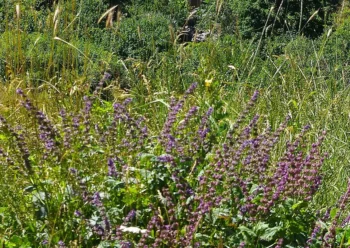
Lilac Sage: A European Beauty for Your Perennial Garden
If you’re looking for a reliable perennial that brings soft purple hues and attracts pollinators to your garden, lilac sage (Salvia verticillata) might catch your eye. This charming herb has made its way from European gardens to North American landscapes, offering a unique take on the beloved sage family.
What is Lilac Sage?
Lilac sage is a perennial forb—basically a non-woody plant that comes back year after year. Unlike its shrubby sage cousins, this herbaceous beauty stays relatively low to the ground, forming neat clumps of gray-green, textured foliage topped with distinctive whorled spikes of purple-violet flowers.
Originally hailing from Europe and western Asia, this plant has naturalized in several North American states, including Connecticut, Illinois, Indiana, Maryland, Massachusetts, New Jersey, New York, Pennsylvania, Vermont, West Virginia, and parts of Ontario, Canada.
- Species observed
- No observations
Garden Appeal and Design Role
What makes lilac sage special in the garden? Its flowers are arranged in distinctive whorls around the stem, creating an almost tiered effect that’s quite different from other salvias. The soft purple blooms appear from early to mid-summer and can continue with deadheading.
This plant works beautifully in:
- Cottage gardens for that relaxed, old-world charm
- Perennial borders as a mid-height filler
- Mediterranean-style gardens alongside lavender and rosemary
- Xeriscaped areas where water conservation is key
- Pollinator gardens to support bees and butterflies
Growing Conditions and Care
Lilac sage is refreshingly easy-going. It thrives in full sun to partial shade and isn’t picky about soil quality, though it strongly prefers well-draining conditions. Once established, it’s quite drought tolerant—perfect for those set it and forget it garden spots.
Key growing requirements:
- USDA hardiness zones 4-8
- Full sun to partial shade
- Well-draining, preferably alkaline to neutral soil
- Moderate water needs; drought tolerant when established
Planting and Care Tips
Plant lilac sage in spring after the last frost, spacing plants 12-18 inches apart to allow for their natural spreading habit. The good news? This plant doesn’t need much fussing over.
Care basics:
- Deadhead spent flowers to encourage continued blooming
- Cut back stems in fall or early spring
- Minimal fertilizer needed—too much can actually reduce flowering
- Divide clumps every 3-4 years to maintain vigor
Pollinator and Wildlife Benefits
Like most salvias, lilac sage is a pollinator magnet. Bees absolutely love the nectar-rich flowers, and you’ll likely spot butterflies visiting throughout the blooming season. The tubular flowers are perfectly designed for these beneficial insects.
A Note on Native Alternatives
While lilac sage is a lovely garden plant that has naturalized in many areas without causing ecological problems, gardeners interested in supporting local ecosystems might consider native alternatives. Depending on your region, native salvias like meadow sage (Salvia pratensis) in some northern areas, or native wild bergamot (Monarda species) can provide similar aesthetic appeal and pollinator benefits while supporting local wildlife.
The Bottom Line
Lilac sage offers an interesting twist on the typical garden sage, with its unique flower arrangement and reliable performance. While it’s not native to North America, it’s not considered problematic either—making it a reasonable choice for gardeners who appreciate its European cottage garden charm. Just remember that choosing native plants when possible helps support local ecosystems and the wildlife that depends on them.