Limeberry: A Tropical Shrub with Thorny Personality
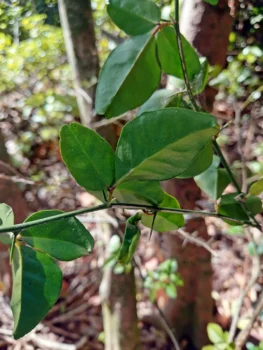
Meet the limeberry (Triphasia trifolia), a compact shrub that’s equal parts charming and defensive. With its glossy leaves, fragrant white flowers, and bright red berries, this little plant packs quite the visual punch – just don’t get too close without gloves, as those thorns mean business!
What’s in a Name?
Scientifically known as Triphasia trifolia, this plant goes by the common name limeberry, though you might occasionally see it listed under the synonym Triphasia trifoliata. The name trifolia refers to its distinctive three-leaflet leaves, while limeberry hints at its citrus family connections and colorful fruit.
Not From Around Here
Let’s get one thing straight – limeberry isn’t a native to the United States. This perennial shrub originally hails from Southeast Asia and has made itself at home as a non-native species that reproduces on its own in the wild. Currently, you’ll find established populations in Florida, Texas, Puerto Rico, and the U.S. Virgin Islands.
- Species observed
- No observations
What Does It Look Like?
Limeberry is a multi-stemmed woody shrub that typically stays under 13-16 feet tall, making it perfect for smaller landscapes. Here’s what catches the eye:
- Glossy, three-part leaves that give it a neat, tropical appearance
- Small, white, sweetly fragrant flowers that appear throughout the growing season
- Bright red berries that follow the flowers
- Sharp thorns along the branches (handle with care!)
Garden Role and Design Uses
This thorny character can serve several purposes in the right garden setting. Its compact size and dense growth make it useful as:
- A natural barrier or security hedge
- An ornamental accent in tropical-themed landscapes
- A container plant for patios and decks
- Part of a xerophytic or drought-tolerant garden design
Growing Conditions and Care
Limeberry is surprisingly adaptable and relatively low-maintenance once established. It thrives in USDA hardiness zones 9b through 11, preferring:
- Full sun to partial shade exposure
- Well-draining soil (it’s not picky about soil type)
- Moderate water until established, then quite drought tolerant
- Coastal conditions – it handles salt spray well
Wetland Tolerance
Limeberry shows different wetland preferences depending on your region. In most areas, it’s considered a facultative upland plant, meaning it usually prefers drier sites but can handle some wetland conditions. However, in the Caribbean, it’s classified as obligate upland, almost never occurring in wetlands.
Wildlife and Pollinator Benefits
The small white flowers do their part for local pollinators, particularly attracting bees and other small insects. The bright red berries may also provide food for birds, though specific wildlife benefits aren’t well-documented.
Should You Plant It?
Here’s the honest truth: while limeberry isn’t currently listed as invasive or noxious, it is a non-native species that has shown it can establish and spread on its own. If you’re committed to native gardening, you might want to consider native alternatives that provide similar benefits.
If you do choose to grow limeberry, be a responsible gardener – keep it contained, don’t let it escape into natural areas, and consider removing it if it starts spreading beyond your intended growing area.
Planting and Care Tips
Should you decide to give limeberry a try, here’s how to keep it happy:
- Plant in well-draining soil and water regularly until the root system establishes
- Provide protection from frost in marginal zones
- Prune as needed to maintain desired shape and size
- Wear thick gloves when handling – those thorns are no joke!
- Monitor for any signs of spreading beyond your intended growing area
Remember, when it comes to non-native plants, the best approach is always to research native alternatives first. Your local extension office or native plant society can help you find indigenous species that provide similar aesthetic appeal while supporting your local ecosystem.