Lion’s Ear: The Showstopping Shrub That Hummingbirds Can’t Resist
If you’re looking for a plant that makes a bold statement in your garden while keeping hummingbirds happy, lion’s ear might just be your new favorite shrub. With its striking orange blooms and architectural presence, this perennial powerhouse brings drama and wildlife appeal to any landscape.
What Makes Lion’s Ear Special?
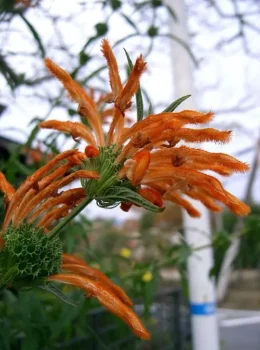
Lion’s ear (Leonotis leonurus) is a multi-stemmed woody shrub that typically grows 13 to 16 feet tall, though it can sometimes reach even greater heights depending on growing conditions. What really sets this plant apart are its vibrant orange tubular flowers that grow in distinctive whorls around the stems, creating an almost otherworldly appearance that’s sure to be a conversation starter.
The plant’s velvety gray-green foliage provides an attractive backdrop for those show-stopping blooms, and the overall architectural form adds structure and visual interest to garden spaces year-round.
Where Does Lion’s Ear Come From?
Originally native to South Africa, lion’s ear has made its way around the world and now grows in various warm climates. In the United States, you’ll find it established in California and Hawaii, where it has naturalized and reproduces on its own in the wild.
- Species observed
- No observations
Is Lion’s Ear Right for Your Garden?
Since lion’s ear isn’t native to North America, you might want to consider native alternatives that provide similar benefits to local ecosystems. However, if you do choose to grow lion’s ear, it can be a valuable addition to certain garden styles, particularly:
- Mediterranean-style landscapes
- Drought-tolerant gardens
- Cottage gardens
- Wildlife-friendly spaces
Wildlife Benefits
One of lion’s ear’s biggest selling points is its ability to attract pollinators. Hummingbirds absolutely love the tubular orange flowers, and you’ll likely see butterflies and bees visiting regularly too. The nectar-rich blooms provide an excellent food source, making your garden a bustling hub of activity.
Growing Conditions and Care
Lion’s ear is surprisingly easy to grow once you understand its preferences. This shrub thrives in USDA hardiness zones 8-11 and loves:
- Full sun exposure
- Well-draining soil
- Minimal water once established
- Good air circulation
The drought tolerance of lion’s ear makes it perfect for water-wise gardening. Once established, it can handle dry conditions remarkably well, though occasional deep watering during extended dry spells will keep it looking its best.
Planting and Care Tips
Getting the most out of your lion’s ear is straightforward with these simple care guidelines:
- Deadheading: Remove spent blooms regularly to encourage continuous flowering throughout the growing season
- Pruning: Cut back the plant in late winter before new growth begins to maintain shape and size
- Soil: Ensure excellent drainage – soggy soil is this plant’s biggest enemy
- Spacing: Give plants plenty of room to grow and ensure good air circulation
Consider Native Alternatives
While lion’s ear can be a beautiful addition to your garden, consider exploring native plants that offer similar benefits to local wildlife and ecosystems. Native alternatives might include local salvias, penstemons, or other tubular-flowered plants that hummingbirds love and that naturally belong in your region.
Whether you choose lion’s ear or a native alternative, the key is creating a garden space that brings you joy while supporting the wildlife in your area. Happy gardening!