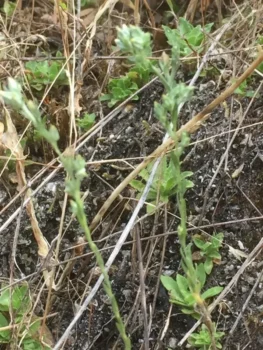
Little Cottonrose: A Tiny Non-Native Annual with Subtle Charm
If you’ve ever spotted tiny, woolly white flowers nestled among other wildflowers and wondered what they were, you might have encountered little cottonrose (Logfia minima). This diminutive annual forb may not win any beauty contests, but it has quietly established itself across several North American regions, bringing its own understated appeal to the landscape.
Getting to Know Little Cottonrose
Little cottonrose goes by the botanical name Logfia minima, and you might also see it listed under its synonyms Filago minima or Oglifa minima in older field guides. As the little in its name suggests, this is not a showstopper plant – it’s more of a quiet garden companion that adds texture and fills in spaces with its silvery-gray foliage.
This annual forb belongs to the sunflower family and is characterized by its dense, woolly hairs that give the entire plant a soft, cottony appearance. The small, inconspicuous flowers are actually quite charming when you get up close, appearing as tiny cream-colored clusters that seem to nestle into the plant’s fuzzy embrace.
Where You’ll Find It
Originally hailing from Europe and western Asia, little cottonrose has made itself at home in several North American locations. You can find it growing in British Columbia, California, Massachusetts, New York, Oregon, Pennsylvania, and Washington. As a non-native species, it has successfully established populations and reproduces on its own in these areas.
- Species observed
- No observations
Should You Plant Little Cottonrose?
Here’s where things get interesting. Little cottonrose occupies a neutral zone in the gardening world – it’s non-native but doesn’t appear to be aggressively invasive or harmful to local ecosystems. If you’re drawn to its subtle beauty and drought-tolerant nature, there’s no major red flag preventing you from including it in your garden.
However, if you’re passionate about supporting native ecosystems, you might want to consider native alternatives that provide similar benefits. Native plants in the aster family or other small annual wildflowers native to your region would offer comparable aesthetic appeal while supporting local wildlife more effectively.
Growing Conditions and Care
One of little cottonrose’s most appealing traits is its easygoing nature. This plant thrives in conditions that might challenge other garden favorites:
- Soil: Prefers dry, sandy, or gravelly soils – perfect for those challenging spots in your garden
- Sun exposure: Full sun is ideal
- Water needs: Drought tolerant once established; actually prefers poor, dry conditions
- USDA Hardiness Zones: 3-9 (though as an annual, it completes its life cycle in one growing season)
Planting and Maintenance Tips
If you decide to grow little cottonrose, you’re in for a low-maintenance experience:
- Sow seeds directly in the garden in spring after the last frost
- Scatter seeds on prepared soil and lightly rake in – they need light to germinate
- Water gently until seedlings establish, then step back and let nature take over
- Avoid rich, fertile soils – this plant actually prefers poor conditions
- Allow plants to self-seed for natural spread in following years
Garden Roles and Design Ideas
Little cottonrose works best in naturalized settings rather than formal garden beds. Consider using it in:
- Rock gardens where its drought tolerance shines
- Wildflower meadows as a subtle textural element
- Dry gardens or xeriscaping projects
- Areas with poor soil where other plants struggle
Wildlife and Pollinator Considerations
While little cottonrose does attract some small insects, it’s not a major pollinator plant. If your goal is to create a pollinator paradise, you’ll want to pair it with more substantial nectar and pollen sources, particularly native flowering plants that have co-evolved with local pollinators.
The Bottom Line
Little cottonrose is a plant that grows on you – literally and figuratively. Its unassuming nature and ability to thrive in challenging conditions make it a useful addition to certain garden situations. While it won’t be the star of your garden show, it might just be the reliable supporting actor that ties everything together. Just remember to balance non-native additions like this with plenty of native plants to keep your local ecosystem happy and healthy.