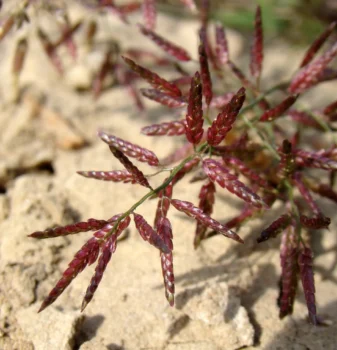
Little Lovegrass: What Every Gardener Should Know About This Common Grass
If you’ve ever wondered about those delicate, wispy grasses popping up in disturbed areas around your garden, you might be looking at little lovegrass (Eragrostis minor). This small annual grass has quite the story to tell – and while it’s not exactly a garden superstar, understanding it can help you make better choices for your landscape.
Meet Little Lovegrass
Little lovegrass goes by its scientific name Eragrostis minor, and you might occasionally see it referenced by its botanical synonyms like Eragrostis poaeoides. This fine-textured annual grass typically grows 6 to 24 inches tall with a spreading habit that can quickly fill available space.
The grass produces delicate, airy seed heads that give it an almost ethereal appearance when backlit by morning or evening sun. Its slender leaves and open growth pattern create a soft, naturalized look that some gardeners find appealing.
Not Quite a Native
Here’s where things get interesting: little lovegrass isn’t actually native to North America. This European and western Asian native has made itself quite at home across the continent, establishing populations that reproduce and persist without human help.
You can find little lovegrass growing throughout most of the United States and several Canadian provinces, from British Columbia to Nova Scotia, and from coast to coast in the lower 48 states. It’s even established itself in some Pacific territories.
- Species observed
- No observations
Should You Plant It?
While little lovegrass isn’t typically considered highly invasive, it’s also not something most gardeners actively seek out. This grass tends to show up on its own in:
- Disturbed soil areas
- Waste places and roadsides
- Gardens with poor or compacted soil
- Areas with inconsistent watering
As an annual grass, it completes its entire life cycle in one growing season, but it’s quite good at self-seeding for the following year.
Growing Conditions and Care
If little lovegrass does appear in your garden, it’s remarkably adaptable. It thrives in full sun and tolerates poor, dry soils that might challenge other plants. The grass grows well in USDA hardiness zones 3 through 10, though as an annual, cold tolerance isn’t really the issue – it’s more about having enough warm weather to complete its growth cycle.
This grass requires minimal care once established, which explains why it’s so successful in disturbed and neglected areas. It’s drought-tolerant and doesn’t need rich soil to survive.
Better Native Alternatives
Since little lovegrass isn’t native, consider these beautiful native grass alternatives that provide similar fine texture and naturalized appeal:
- Buffalo grass (Bouteloua dactyloides) for prairie regions
- Little bluestem (Schizachyrium scoparium) for most of North America
- Purple needlegrass (Nassella pulchra) for western areas
- Poverty oatgrass (Danthonia spicata) for eastern regions
These native options provide much better wildlife benefits, including food for native birds and habitat for beneficial insects.
Wildlife and Ecological Value
As a wind-pollinated grass, little lovegrass doesn’t offer much for pollinators like bees and butterflies. Some birds may eat the seeds, but native grasses typically provide much better wildlife value overall.
The Bottom Line
Little lovegrass is one of those plants that you’re more likely to encounter than intentionally plant. While it’s not aggressively invasive, it’s also not adding much to your garden’s ecological value. If you’re looking for fine-textured grasses with a naturalized appearance, native alternatives will give you better results and support local wildlife too.
If little lovegrass does show up in your garden, you can certainly leave it if you enjoy its delicate appearance – just keep an eye on it to make sure it doesn’t crowd out more desirable plants.