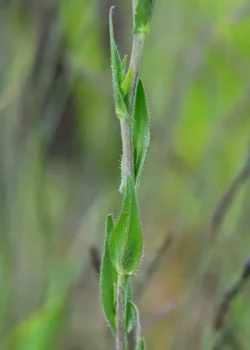
Littlepod False Flax: A Humble Annual with Agricultural Roots
Meet littlepod false flax (Camelina microcarpa), a modest little annual that’s been quietly making itself at home across North America for decades. This unassuming member of the mustard family might not win any beauty contests, but it has some interesting qualities that make it worth knowing about – whether you’re considering it for your garden or just curious about the plants growing wild in your area.
What Exactly Is Littlepod False Flax?
Don’t let the name fool you – littlepod false flax isn’t related to true flax at all. This annual forb belongs to the Brassicaceae (mustard) family and gets its common name from its small, heart-shaped seed pods. Originally hailing from Europe and western Asia, this hardy little plant has made itself quite comfortable across most of North America, from coast to coast and border to border.
As a non-native species, littlepod false flax reproduces spontaneously in the wild and has established persistent populations throughout Canada and the lower 48 states. You can find it growing in an impressive list of locations, including Alberta, British Columbia, Manitoba, New Brunswick, Arizona, Arkansas, California, Nova Scotia, Ontario, Colorado, Prince Edward Island, Connecticut, Quebec, Delaware, Saskatchewan, District of Columbia, Yukon, Georgia, Idaho, Illinois, Indiana, Iowa, Kansas, Kentucky, Louisiana, Maine, Maryland, Massachusetts, Michigan, Minnesota, Mississippi, Missouri, Montana, Nebraska, Nevada, New Hampshire, New Jersey, New Mexico, New York, North Carolina, North Dakota, Ohio, Oklahoma, Oregon, Pennsylvania, Rhode Island, South Carolina, South Dakota, Tennessee, Texas, Utah, Vermont, Virginia, Washington, West Virginia, Wisconsin, Wyoming, and Newfoundland.
- Species observed
- No observations
Should You Grow It?
Here’s where things get interesting. Littlepod false flax occupies a bit of a gray area in the gardening world. It’s not particularly showy, but it’s not problematic either. This plant typically prefers upland areas – it rarely bothers with wetlands, making it a good choice for drier garden spots.
Reasons you might want to grow it:
- Extremely low-maintenance and drought-tolerant
- Attracts small pollinators like native bees and flies with its tiny yellow flowers
- Interesting historical connection to ancient agriculture
- Self-seeds readily, so it can fill in bare spots
- Thrives in poor soils where other plants struggle
Reasons you might skip it:
- Not particularly ornamental – the flowers are quite small
- Can self-seed aggressively in ideal conditions
- As a non-native, it doesn’t provide the same ecological benefits as indigenous plants
Native Alternatives to Consider
If you’re drawn to the idea of a low-maintenance annual with small flowers, consider these native alternatives that will better support local ecosystems:
- Wild mustard species native to your region
- Native members of the sunflower family
- Regional wildflower mixes that include indigenous annuals
Growing Littlepod False Flax Successfully
If you decide to give this humble plant a try, you’ll be pleased to know it’s about as easy-going as they come. This annual to biennial forb has adapted well to a wide range of conditions across multiple climate zones.
Ideal Growing Conditions:
- Full sun exposure
- Well-draining soil (it’s not picky about soil quality)
- USDA hardiness zones 3-9
- Dry to moderately moist conditions
Planting Tips:
- Direct seed in early spring or fall
- Scatter seeds on prepared soil surface and lightly rake in
- No need for soil amendments – this plant actually prefers lean conditions
- Space isn’t critical since it’s small and doesn’t compete heavily
Care Requirements:
- Virtually none! This is a plant it and forget it species
- No fertilizing needed
- Drought-tolerant once established
- Will self-seed for next year’s display
What to Expect
Littlepod false flax won’t give you dramatic garden impact, but it offers subtle charm. The small yellow flowers appear in loose clusters at the tips of branching stems, creating a delicate, airy texture. After flowering, the characteristic small, heart-shaped seed pods develop – these are actually quite attractive in their own modest way.
The plant typically completes its life cycle quickly, making it useful for filling temporary gaps in garden beds or naturalizing in less formal areas of your landscape.
The Bottom Line
Littlepod false flax is neither garden superstar nor ecological villain – it’s simply a quiet, adaptable plant that does its thing without much fuss. If you’re looking for a low-maintenance annual that can handle tough conditions and you don’t mind its non-native status, it might find a place in your garden. However, if supporting native ecosystems is a priority, you’ll probably want to explore indigenous alternatives that offer similar growing characteristics while better serving local wildlife.
Whatever you decide, now you know a bit more about this unassuming little plant that’s made itself so thoroughly at home across our continent. Sometimes the most interesting garden stories come from the most unexpected characters!