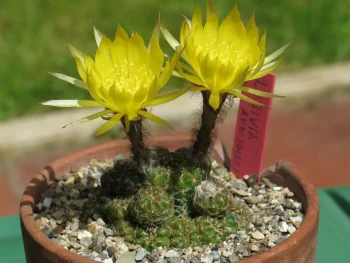
Lobivia arachnacantha: A Charming Bolivian Cactus for Your Collection
Meet Lobivia arachnacantha, a delightful little cactus that’s been quietly winning hearts in the succulent world. This pint-sized powerhouse may not have a catchy common name, but what it lacks in nickname fame, it more than makes up for with its quirky charm and surprisingly showy blooms.
Where Does This Little Guy Come From?
Lobivia arachnacantha calls the high-altitude regions of Bolivia and northern Argentina home. In its native habitat, this tough little cactus has adapted to rocky slopes and challenging mountain conditions, making it a true survivor with a story to tell.
What Makes It Special?
Don’t let its small stature fool you – this globular cactus is a real showstopper when it blooms. Here’s what catches the eye:
- Compact, spherical shape that fits perfectly in small spaces
- Distinctive spination that gives it character and protection
- Vibrant flowers in shades of yellow, orange, or red that seem almost too big for the plant
- Slow, steady growth that won’t quickly outgrow its welcome
Garden Design and Landscape Role
This little gem shines brightest as an accent plant or conversation starter. It’s perfect for:
- Container gardens and succulent arrangements
- Rock gardens where it can nestle between stones
- Desert-themed landscapes and xeriscapes
- Indoor collections on sunny windowsills
- Small space gardens where every plant needs to earn its keep
Growing Conditions and Care
Like most cacti, Lobivia arachnacantha appreciates the less is more approach to care:
- Light: Full sun for best growth and flowering
- Soil: Well-draining, sandy or rocky soil is essential
- Water: Minimal watering – let soil dry completely between waterings
- Temperature: Hardy in USDA zones 9b-11, needs protection from frost
Planting and Care Tips
Success with this cactus comes down to respecting its desert origins:
- Plant in a container with drainage holes or ensure excellent soil drainage
- Water deeply but infrequently – overwatering is the quickest way to lose this plant
- Protect from freezing temperatures by bringing containers indoors
- Feed sparingly with diluted cactus fertilizer during growing season
- Handle carefully – those spines mean business!
Wildlife and Pollinator Benefits
When in bloom, this cactus becomes a beacon for small pollinators, particularly bees who appreciate the nectar-rich flowers. While not native to North America, it can still provide some pollinator support in suitable climates.
Should You Plant It?
Lobivia arachnacantha makes an excellent choice for gardeners looking to add something unique to their collection without high maintenance demands. While it’s not native to North America, it doesn’t appear to pose invasive concerns and stays well-contained.
That said, if you’re prioritizing native plants, consider exploring native cacti options like Prickly Pear (Opuntia species) or Barrel Cactus (Ferocactus species) that might be better suited to your local ecosystem.
Whether you’re a seasoned cactus collector or just starting your succulent journey, this little Bolivian beauty offers big rewards for minimal effort – just the way we like our garden friends to be!