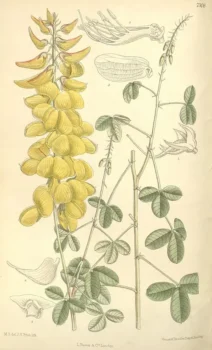
Longbeak Rattlebox: A Lesser-Known Shrub with Limited Garden Information
Meet the longbeak rattlebox (Crotalaria longirostrata), a perennial shrub that’s managed to establish itself in Hawaii despite being a non-native species. While this plant might sound intriguing with its distinctive common name, there’s quite a bit we don’t know about this particular species, making it a bit of a botanical mystery.
What is Longbeak Rattlebox?
Longbeak rattlebox is a woody perennial shrub that typically grows with multiple stems arising from or near the ground. Like most shrubs, it usually stays under 13-16 feet tall, though environmental conditions can sometimes push it beyond these typical boundaries or even result in a single-stemmed growth pattern.
This plant belongs to the Crotalaria genus, which is part of the legume family. The rattlebox portion of its common name likely refers to the characteristic seed pods that many Crotalaria species produce – pods that rattle when shaken due to loose seeds inside.
Where Does It Grow?
Currently, Crotalaria longirostrata is documented as growing in Hawaii, where it has established itself as a naturalized non-native species. This means it reproduces on its own in the wild without human intervention and has managed to persist in Hawaiian ecosystems.
- Species observed
- No observations
Should You Plant Longbeak Rattlebox?
Here’s where things get a bit tricky. While this plant isn’t currently listed as invasive or noxious, there’s limited information available about its garden performance, growing requirements, or potential ecological impacts. This lack of horticultural data makes it difficult to recommend for home gardeners.
Since it’s already established itself as a non-native species in Hawaii, gardeners in that region might encounter it, but we’d generally recommend focusing on native alternatives that:
- Have well-documented growing requirements
- Support local wildlife and pollinators
- Are adapted to local growing conditions
- Won’t pose potential ecological risks
Growing Information Gap
Unfortunately, specific details about longbeak rattlebox’s preferred growing conditions, hardiness zones, care requirements, and landscape uses aren’t well-documented in horticultural literature. This information gap extends to its pollinator value, wildlife benefits, and propagation methods.
Without reliable growing information, attempting to cultivate this species would essentially be an experiment – and not one we’d recommend for most gardeners.
Better Native Alternatives
If you’re interested in shrubs for your landscape, especially in Hawaii, consider exploring native options that offer:
- Proven garden performance
- Support for native wildlife
- Adaptation to local climate conditions
- Cultural significance and ecological value
Native plant societies and local extension services can provide excellent recommendations for indigenous shrubs that will thrive in your specific location while supporting local ecosystems.
The Bottom Line
While longbeak rattlebox has managed to establish itself in Hawaii, the lack of comprehensive horticultural information makes it a questionable choice for intentional cultivation. Sometimes the most responsible approach is to appreciate a plant’s existence in nature while choosing better-understood, native alternatives for our gardens.
If you encounter this plant in the wild, it’s worth observing and appreciating, but when it comes to your garden, you’ll likely find more success and ecological benefit with well-documented native species.