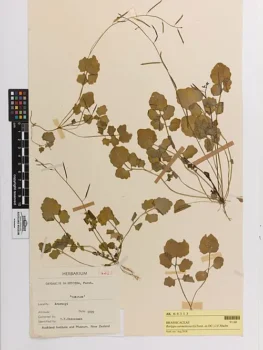
Non-native Plants

Longrunner

Rorippa sarmentosa

USDA symbol: ROSA

perennial forb

Hawaii: non-native, naturalized

If you’ve stumbled across the name longrunner in your plant research, you might be wondering whether this wetland-loving perennial deserves a spot in your garden. Let’s dive into what we know about Rorippa sarmentosa and help you decide if it’s right for your landscape. Longrunner (Rorippa sarmentosa) is a perennial ...

Longrunner: What You Need to Know About This Wetland Perennial

If you’ve stumbled across the name longrunner in your plant research, you might be wondering whether this wetland-loving perennial deserves a spot in your garden. Let’s dive into what we know about Rorippa sarmentosa and help you decide if it’s right for your landscape.

What is Longrunner?

Longrunner (Rorippa sarmentosa) is a perennial forb that belongs to the mustard family. As a forb, it’s an herbaceous plant without significant woody tissue—think of it as the garden equivalent of a reliable friend who’s always there but doesn’t take up too much space. You might also see it listed under its scientific synonym, Nasturtium sarmentosum, in older botanical references.

Where Does Longrunner Come From?

Here’s where things get interesting: longrunner is not native to the areas where it’s commonly found today. In Hawaii, where it currently grows, this plant is considered a non-native species that was introduced but has since established itself in the wild. It reproduces on its own and persists without human intervention.

  • Species observed
  • No observations

Longrunner’s Garden Personality

This perennial has a particular fondness for wet feet. In Hawaii, longrunner holds a Facultative Wetland status, which means it usually shows up in wetlands but can occasionally tolerate drier conditions. Think of it as a plant that prefers to live near the water cooler—it’s most comfortable in moist environments but can adapt when necessary.

Should You Plant Longrunner?

Here’s the honest truth: while longrunner isn’t classified as invasive or harmful, there’s limited information available about its specific growing requirements, aesthetic qualities, or garden benefits. When you’re choosing plants for your landscape, especially in Hawaii, you might want to consider some alternatives.

Better Alternatives: Go Native!

Instead of taking a chance on longrunner, why not explore Hawaii’s incredible native plant options? Native Hawaiian plants offer several advantages:

  • They’re naturally adapted to local conditions
  • They support native wildlife and pollinators
  • They typically require less water and maintenance once established
  • They help preserve Hawaii’s unique ecological heritage

For wetland areas, consider native Hawaiian sedges, native ferns, or other indigenous plants that thrive in moist conditions and provide habitat for local wildlife.

The Bottom Line

While longrunner might seem like an interesting addition to a wet garden area, the limited information about its cultivation and care, combined with its non-native status, makes it a questionable choice for most gardeners. Your landscape—and Hawaii’s ecosystem—will likely benefit more from choosing well-researched native alternatives that offer proven beauty, wildlife benefits, and easier care instructions.

Remember, gardening is about creating spaces that work for both you and the local environment. When in doubt, going native is usually the way to go!

Rorippa sarmentosa is also known as...

Often we refer to plants by their common names. When shopping for plants the scientific name is the best way to positively identify the plant species you desire. But some plants have more than one name! While it doesn't happen often, nurseries might display one name while you're searching for another. Rorippa sarmentosa is also known as:

Nasturtium sarmentosum Schinz & | USDA symbol: NASA2

Why do some plants have more than one name? Over time plant species may be renamed for a few reasons:

  1. Botanists in different regions named the same plant without knowing it had already been classified.
  2. A species was reclassified after scientific advances in, for example, DNA analysis.
  3. Slight variations within a species are sometimes mistakenly identified as entirely new species.

Wetland Status

The rule of seasoned gardeners and landscapers is to choose the "right plant for the right place" — matching plants to their ideal growing conditions, so they'll thrive with less care and fewer inputs. But the simplicity of this catchphrase conceals how tricky plant selection can be if you don't have the right information. While tags on nursery plants list watering requirements, there's more to the story.

Knowing a plant's wetland status can simplify the process by revealing the interaction between plants, water, and soil. You might be surprised to learn that popular landscape plants are wetland species! And what may be a wetland plant in one area, in another it might thrive in drier conditions. The table below gives insight into the preferred growing conditions of this plant throughout its geographical distribution.

Region
Preferred Habitat

Hawaii ()

Facultative Wetland
Wetland Glossary
Obligate Wetland
Facultative Wetland
Facultative
Facultative Upland
Obligate Upland
Almost always occurs in wetlands
Usually occurs in wetlands but may occur in non-wetlands
Can occur in wetlands and non-wetlands
Usually occurs in non-wetlands but may occur in wetlands
Almost never occurs in wetlands

Classification

Group: Dicot
Kingdom: Plantae - Plants
Subkingdom: Tracheobionta - Vascular plants
Superdivision: Spermatophyta - Seed plants
Division: Magnoliophyta - Flowering plants
Class: Magnoliopsida - Dicotyledons
Subclass: Dilleniidae
Order: Capparales
Family: Brassicaceae Burnett - Mustard family
Genus: Rorippa Scop. - yellowcress

Species: Rorippa sarmentosa (G. Forst. ex DC.) J.F. Macbr. - longrunner

Plant data source: USDA, NRCS 2025. The PLANTS Database. https://plants.usda.gov,. 2/25/2025. National Plant Data Team, Greensboro, NC USA