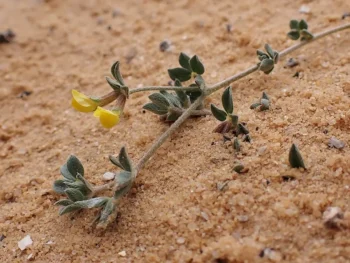
Lotus halophilus: The Mystery Plant That Keeps Botanists Guessing
Ever stumble across a plant name that makes you scratch your head? Meet Lotus halophilus, a species that’s about as elusive as a unicorn in your backyard. If you’re hoping to add this particular member of the pea family to your garden, you might want to sit down for this one.
What We Know (Spoiler Alert: It’s Not Much)
Lotus halophilus belongs to the legume family, making it a cousin to familiar garden favorites like sweet peas and clover. The name halophilus hints that this plant might have an affinity for salty conditions, but that’s about where our certainty ends. This species has a synonym, Lotus pusillus Viv., which is marked as nom. illeg. in botanical terms – essentially meaning it’s an illegitimate name that adds to the confusion rather than clarity.
The Geographic Mystery
Where does Lotus halophilus call home? Your guess is as good as ours. The geographical distribution of this species remains unknown, making it impossible to determine its native range or whether it might be suitable for your local climate.
Why You Probably Can’t Grow It (And Maybe Shouldn’t Try)
Here’s the thing about mystery plants – they tend to stay mysterious for a reason. Without knowing Lotus halophilus’s:
- Preferred growing conditions
- USDA hardiness zones
- Water requirements
- Soil preferences
- Mature size
- Growth rate
Attempting to cultivate this species would be like trying to bake a cake without a recipe, ingredients list, or oven temperature. Even experienced gardeners would be flying blind.
Better Alternatives for Your Garden
If you’re drawn to the Lotus genus, consider these well-documented alternatives that won’t leave you guessing:
- Lotus corniculatus (Bird’s-foot Trefoil) – A hardy perennial with bright yellow flowers
- Lotus purshianus (Spanish Clover) – Native to western North America with attractive pink blooms
- Lotus crassifolius (Thick-leaved Lotus) – A California native perfect for dry gardens
The Takeaway for Native Plant Enthusiasts
Sometimes the most honest thing a gardening expert can tell you is we just don’t know enough. Lotus halophilus represents one of those botanical puzzles that reminds us how much mystery still exists in the plant world. While it’s tempting to chase after rare or unusual species, your garden (and sanity) will thank you for choosing well-documented native plants with known growing requirements.
If you’re absolutely determined to explore the Lotus genus, stick with species that have established track records and clear cultivation guidelines. Your local native plant society can point you toward Lotus species that are actually native to your region and have proven garden performance.
After all, the best native garden is one filled with plants that actually thrive – not ones that keep you awake at night wondering if they’re still alive.