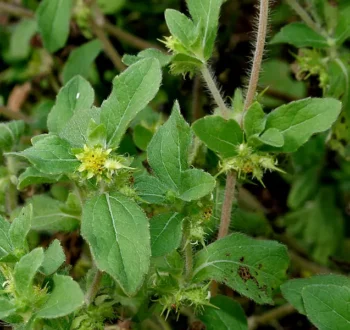
Low Starbur: A Humble Ground Cover That’s Tougher Than It Looks
Meet low starbur (Acanthospermum humile), a little plant that might not win any beauty contests but certainly deserves recognition for its resilience and adaptability. This unassuming annual forb has quietly made itself at home across several states, proving that sometimes the most modest plants can be surprisingly useful in the right garden setting.
Getting to Know Low Starbur
Low starbur goes by the scientific name Acanthospermum humile, though you might also see it listed under its synonym Melampodium humile. As its common name suggests, this plant stays close to the ground, creating a spreading mat of foliage topped with small, cheerful yellow flowers.
This non-native species originally hails from tropical and subtropical regions of the Americas but has established itself in Alabama, Florida, New York, and South Carolina. It’s what botanists call a forb – essentially an herbaceous plant without woody stems that dies back each year.
- Species observed
- No observations
What Does Low Starbur Look Like?
Don’t expect showstopping blooms from low starbur. This plant is all about understated charm:
- Small, yellow daisy-like flowers that appear throughout the growing season
- Low-growing, spreading habit that forms a natural ground cover
- Simple leaves arranged along branching stems
- Compact size that rarely gets more than a few inches tall
Where Low Starbur Fits in Your Garden
Low starbur isn’t destined for formal flower beds or manicured landscapes, but it has its place in more relaxed garden settings. Consider it for:
- Naturalized areas where you want something low-maintenance
- Filling gaps in informal garden spaces
- Areas with poor soil where other plants struggle
- Spaces that need quick ground coverage
Growing Conditions and Care
One of low starbur’s greatest strengths is its ability to thrive in less-than-ideal conditions. This adaptable annual prefers:
- Full sun exposure for best growth
- Well-drained soils (but tolerates various soil types)
- USDA hardiness zones 8-11, though it may self-seed in favorable conditions
- Minimal water once established – it’s quite drought tolerant
Care couldn’t be simpler. Low starbur essentially takes care of itself once established, often self-seeding for the following year. No fertilizing, pruning, or fussing required – just let it do its thing.
Benefits for Wildlife
While low starbur’s flowers are small, they still provide nectar for tiny pollinators including small bees, flies, and other beneficial insects. Every little bit helps when it comes to supporting pollinator populations!
Should You Plant Low Starbur?
Low starbur occupies an interesting middle ground in the gardening world. As a non-native species that has naturalized in several states, it’s neither aggressively invasive nor particularly problematic. However, if you’re committed to native gardening, you might want to consider indigenous alternatives that provide similar benefits.
Some native options that offer comparable ground-covering abilities include regional wildflowers and native grasses that naturally occur in your area. Check with your local native plant society or extension office for recommendations specific to your region.
The Bottom Line
Low starbur is an unpretentious plant that asks for little and delivers steady, if modest, results. While it may not be the star of your garden, it can certainly play a supporting role in naturalized spaces where you need something tough, reliable, and self-sufficient. Whether you choose to grow it or opt for native alternatives, the most important thing is creating garden spaces that work for both you and local wildlife.