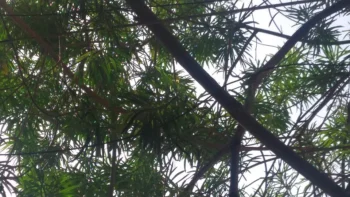
Luckynut (Thevetia peruviana): A Bright but Controversial Garden Choice
If you’re looking for a plant that brings year-round sunshine to your garden with minimal fuss, you might have stumbled across the luckynut. Also known as yellow oleander or be-still tree, this tropical shrub has been turning heads with its cheerful yellow blooms and glossy green foliage. But before you rush to the nursery, there are some important things every gardener should know about this eye-catching but complex plant.
What Exactly is Luckynut?
Luckynut (Thevetia peruviana) is a perennial shrub that typically grows 4-5 meters (13-16 feet) tall, though it can sometimes stretch taller under the right conditions. This multi-stemmed woody plant produces bright yellow, funnel-shaped flowers that bloom throughout the year in warm climates, followed by distinctive triangular seed pods that give the plant one of its common names.
You might also see this plant listed under its synonyms Cascabela thevetia, Cerbera thevetia, or Thevetia neriifolia in older gardening references.
Where Does Luckynut Come From?
Here’s where things get interesting from a native gardening perspective. Luckynut isn’t actually native to the United States – it originally hails from Central America and northern South America, particularly Peru. However, it has established itself and now reproduces spontaneously in several U.S. locations including Florida, Hawaii, Texas, Puerto Rico, the U.S. Virgin Islands, and some Pacific territories.
- Species observed
- No observations
The Good: Why Gardeners Love Luckynut
There’s no denying that luckynut has some appealing qualities that make it attractive to gardeners:
- Low maintenance: Once established, it’s quite drought-tolerant and thrives with minimal care
- Year-round blooms: Those bright yellow flowers keep coming in warm climates
- Versatile landscaping: Works well as a hedge, specimen plant, or barrier planting
- Coastal friendly: Tolerates salt spray and sandy soils
- Pollinator magnet: Butterflies are particularly drawn to the flowers
The Concerning: What You Need to Know
Before you fall head-over-heels for this tropical beauty, there are some serious considerations:
Extreme toxicity: Every part of this plant is highly poisonous to humans, pets, and livestock. The seeds are particularly dangerous and have been known to cause fatal poisoning. If you have children or pets, this plant poses a significant safety risk.
Non-native status: As a non-native species that readily self-seeds, luckynut doesn’t provide the same ecological benefits as native plants and may potentially outcompete local flora.
Growing Conditions and Care
If you decide to grow luckynut, it’s surprisingly easy to please. This shrub is classified as Obligate Upland in most regions, meaning it almost never occurs in wetlands and prefers well-draining soils.
Ideal Conditions:
- Sunlight: Full sun for best flowering
- Soil: Well-draining soil; tolerates poor soils
- Water: Drought-tolerant once established, but benefits from occasional deep watering
- Climate: USDA zones 9-11; frost-sensitive
- Maintenance: Prune regularly to maintain desired shape and size
Better Native Alternatives
Given luckynut’s non-native status and serious safety concerns, you might want to consider these native alternatives that offer similar benefits:
- For Florida gardeners: Firebush (Hamelia patens) or Wild coffee (Psychotria nervosa)
- For Texas gardeners: Turk’s cap (Malvaviscus arboreus var. drummondii) or Flame acanthus (Anisacanthus quadrifidus var. wrightii)
- For Hawaii gardeners: Native hibiscus species (Hibiscus brackenridgei)
The Bottom Line
Luckynut certainly earns its place as a striking ornamental plant with minimal care requirements and year-round appeal. However, its extreme toxicity and non-native status make it a questionable choice for many gardens, especially those frequented by children, pets, or wildlife. If you do choose to plant it, exercise extreme caution, consider the safety implications carefully, and perhaps explore native alternatives that can provide similar aesthetic appeal while supporting local ecosystems.
Remember, the most beautiful garden is one that’s both stunning and safe for everyone who enjoys it!