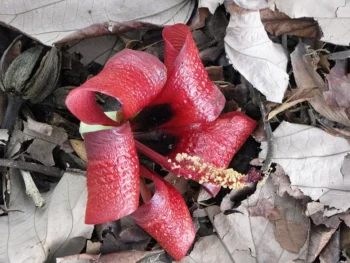
Mahoe: A Tropical Tree That’s Worth Considering (With Some Caveats)
If you’re dreaming of adding some serious tropical flair to your landscape, you might want to get acquainted with mahoe (Hibiscus elatus). This striking tree brings the classic hibiscus charm we all love, but in tree form – think of it as hibiscus that decided to really reach for the stars!
What Exactly Is Mahoe?
Mahoe, scientifically known as Hibiscus elatus, is a perennial tree that can grow impressively tall – we’re talking 13 feet and beyond. Unlike its shrubby hibiscus cousins, this beauty develops a single trunk and can become a substantial presence in your landscape. You might also see it listed under its synonym Pariti elatum in some botanical references.
Where Does Mahoe Come From?
Here’s where things get interesting from a native gardening perspective. While mahoe has established itself in Puerto Rico and reproduces there naturally, it’s actually a Caribbean native from Jamaica and Cuba. In Puerto Rico, it’s considered a non-native species that has naturalized – meaning it’s made itself at home but wasn’t originally from there.
- Species observed
- No observations
The Good, The Beautiful, and The Practical
Let’s talk about why mahoe might catch your eye:
- Stunning flowers: Classic hibiscus blooms that are typically yellow with striking red centers
- Impressive foliage: Large, heart-shaped leaves that create excellent shade
- Attractive bark: Develops smooth, pale bark as it matures
- Pollinator magnet: Bees, butterflies, and hummingbirds absolutely love the nectar-rich flowers
- Shade provider: Makes an excellent specimen or shade tree for large landscapes
Growing Conditions and Care
If you’re in USDA hardiness zones 10-12 and thinking about adding mahoe to your landscape, here’s what you need to know:
Light and Location: Mahoe thrives in full sun to partial shade. Give it a spot where it can spread out – this isn’t a tree for small spaces!
Soil Requirements: Well-draining soil is key. While mahoe isn’t too fussy about soil type, it definitely doesn’t appreciate waterlogged conditions.
Water Needs: Regular moisture is important, especially during dry periods. Think consistent rather than sporadic deep watering.
Special Considerations: This tree can be sensitive to strong winds, so choose your planting location wisely. A sheltered spot will help prevent damage to those lovely large leaves.
Planting and Care Tips
- Plant in spring after the last frost risk has passed
- Mulch around the base to help retain moisture and regulate soil temperature
- Water regularly during the first growing season to establish strong roots
- Prune as needed to maintain shape, ideally in late winter or early spring
- Protect young trees from strong winds until they’re well established
A Word About Native Alternatives
While mahoe can be a beautiful addition to tropical landscapes, it’s worth considering native alternatives that provide similar benefits while supporting local ecosystems. In Puerto Rico, you might explore native flowering trees that offer comparable aesthetic appeal and wildlife benefits. Native plants are typically better adapted to local conditions and provide more comprehensive support for native wildlife.
The Bottom Line
Mahoe is a gorgeous tree that can make a stunning statement in the right tropical or subtropical garden. Its showy flowers and impressive stature make it a conversation starter, and pollinators certainly appreciate it. However, as with any non-native plant, consider whether native alternatives might better serve your local ecosystem. If you do choose mahoe, you’ll need space, warmth (zones 10-12 only), and the commitment to provide regular care – but the tropical paradise effect might just be worth it!