Non-native Plants

Malabar Plum

Syzygium jambos

USDA symbol: SYJA

perennial tree

Hawaii: non-native, naturalized
Lower 48 states: non-native, naturalized
Pacific Basin excluding Hawaii: non-native, naturalized
Puerto Rico: non-native, naturalized
U.S. Virgin Islands: non-native, naturalized

If you’re dreaming of adding a touch of tropical elegance to your garden, the Malabar plum might just be the tree that catches your fancy. Also known as rose apple, this evergreen beauty brings both ornamental value and edible rewards to warm-climate gardens. The Malabar plum (Syzygium jambos) is a ...

Malabar Plum: A Tropical Beauty for Your Garden

If you’re dreaming of adding a touch of tropical elegance to your garden, the Malabar plum might just be the tree that catches your fancy. Also known as rose apple, this evergreen beauty brings both ornamental value and edible rewards to warm-climate gardens.

What is a Malabar Plum?

The Malabar plum (Syzygium jambos) is a perennial tree that can grow quite impressive—typically reaching heights of 13 to 16 feet or more. With its single trunk and lush canopy, it creates a lovely focal point in any landscape. You might also see it listed under its former scientific names, Eugenia jambos or Jambosa jambos, but don’t let that confuse you—it’s all the same delightful tree!

Where Does It Come From?

Originally hailing from Southeast Asia, particularly Malaysia and India, the Malabar plum has made itself at home in various warm regions around the world. It’s now established in Florida, Hawaii, Guam, Palau, Puerto Rico, and the Virgin Islands, where it reproduces naturally and has become part of the local landscape.

  • Species observed
  • No observations

Why Consider Growing a Malabar Plum?

This tree offers quite a few appealing qualities for the home gardener:

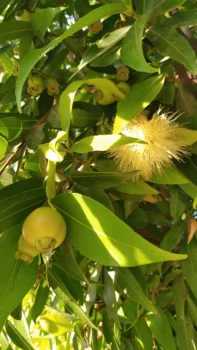
  • Beautiful blooms: The fragrant white flowers feature prominent, showy stamens that create an almost powder-puff appearance
  • Attractive foliage: Glossy, dark green leaves provide year-round beauty
  • Edible fruit: The bell-shaped fruits ripen to pink or red and have a mild, sweet flavor
  • Pollinator magnet: Those lovely flowers attract bees and other beneficial pollinators
  • Versatile placement: Works well in both wetland and upland garden settings

What Type of Garden Works Best?

The Malabar plum thrives in tropical and subtropical gardens, making it perfect for edible landscapes or ornamental plantings. It’s particularly well-suited for:

  • Shade tree plantings
  • Tropical garden themes
  • Edible landscaping projects
  • Pollinator gardens

Growing Conditions and Care

If you’re in USDA hardiness zones 10-12, you’re in luck! The Malabar plum prefers:

  • Light: Full sun to partial shade
  • Soil: Moist, well-draining soil
  • Climate: Warm, humid conditions
  • Water: Regular watering, especially during dry periods

Planting and Care Tips

Getting your Malabar plum off to a good start is fairly straightforward:

  • Plant in a location protected from strong winds
  • Water regularly, but ensure good drainage to prevent root rot
  • Prune occasionally to maintain shape and remove dead branches
  • Mulch around the base to retain moisture and suppress weeds

A Word About Native Alternatives

While the Malabar plum can be a lovely addition to appropriate climates, it’s worth noting that this tree isn’t native to North American regions where it now grows. If you’re passionate about supporting local ecosystems, consider exploring native fruit trees and flowering species that might offer similar benefits to your garden and local wildlife. Your local native plant society or extension office can provide excellent recommendations for beautiful, regionally appropriate alternatives.

Whether you choose the exotic charm of a Malabar plum or opt for a native alternative, the key is selecting plants that will thrive in your specific growing conditions while bringing you joy in your garden adventures!

Syzygium jambos is also known as...

Often we refer to plants by their common names. When shopping for plants the scientific name is the best way to positively identify the plant species you desire. But some plants have more than one name! While it doesn't happen often, nurseries might display one name while you're searching for another. Syzygium jambos is also known as:

Eugenia jambos | USDA symbol: EUJA
Jambosa jambos | USDA symbol: JAJA2

Why do some plants have more than one name? Over time plant species may be renamed for a few reasons:

  1. Botanists in different regions named the same plant without knowing it had already been classified.
  2. A species was reclassified after scientific advances in, for example, DNA analysis.
  3. Slight variations within a species are sometimes mistakenly identified as entirely new species.

Wetland Status

The rule of seasoned gardeners and landscapers is to choose the "right plant for the right place" — matching plants to their ideal growing conditions, so they'll thrive with less care and fewer inputs. But the simplicity of this catchphrase conceals how tricky plant selection can be if you don't have the right information. While tags on nursery plants list watering requirements, there's more to the story.

Knowing a plant's wetland status can simplify the process by revealing the interaction between plants, water, and soil. You might be surprised to learn that popular landscape plants are wetland species! And what may be a wetland plant in one area, in another it might thrive in drier conditions. The table below gives insight into the preferred growing conditions of this plant throughout its geographical distribution.

Region
Preferred Habitat

Atlantic and Gulf Coastal Plain (AL, AR, DC, DE, FL, GA, IL, KY, LA, MD, MS, MO, NC, NJ, OK, PA, SC, TN, TX, VA)

Facultative Upland

Caribbean (PR, VI)

Facultative

Hawaii ()

Facultative
Wetland Glossary
Obligate Wetland
Facultative Wetland
Facultative
Facultative Upland
Obligate Upland
Almost always occurs in wetlands
Usually occurs in wetlands but may occur in non-wetlands
Can occur in wetlands and non-wetlands
Usually occurs in non-wetlands but may occur in wetlands
Almost never occurs in wetlands

Classification

Group: Dicot
Kingdom: Plantae - Plants
Subkingdom: Tracheobionta - Vascular plants
Superdivision: Spermatophyta - Seed plants
Division: Magnoliophyta - Flowering plants
Class: Magnoliopsida - Dicotyledons
Subclass: Rosidae
Order: Myrtales
Family: Myrtaceae Juss. - Myrtle family
Genus: Syzygium P. Br. ex Gaertn. - syzygium

Species: Syzygium jambos (L.) Alston - Malabar plum

Plant data source: USDA, NRCS 2025. The PLANTS Database. https://plants.usda.gov,. 2/25/2025. National Plant Data Team, Greensboro, NC USA