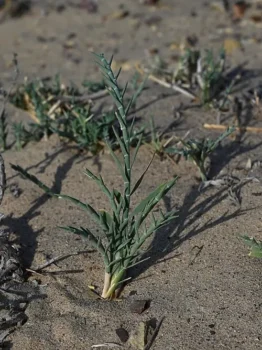
Mamoncillo: A Hardy Grass for Challenging Landscapes
If you’ve ever struggled with salty, alkaline soil that seems to defeat every plant you try, let me introduce you to mamoncillo (Aeluropus lagopoides). This unassuming grass might just be the solution to your most challenging landscape spots, though it’s definitely not your typical garden center find.
What Exactly is Mamoncillo?
Mamoncillo is a low-growing, creeping grass that belongs to the same family as your lawn grass, but with a much more adventurous spirit. Also known by its synonym Aeluropus repens, this hardy little plant has evolved to thrive where most other plants would throw in the towel. Think of it as the tough-as-nails cousin of ornamental grasses – not the prettiest at the garden party, but incredibly reliable when conditions get rough.
Where Does Mamoncillo Come From?
This resilient grass calls the Mediterranean region, North Africa, and parts of Asia home. It’s naturally found in coastal areas and inland locations where salt accumulation and alkaline soils create challenging growing conditions. In these harsh environments, mamoncillo has learned to not just survive, but actually flourish.
Should You Grow Mamoncillo in Your Garden?
Here’s the honest truth: mamoncillo isn’t going to win any beauty contests. But if you’re dealing with problem areas in your landscape, this grass could be exactly what you need. Consider mamoncillo if you have:
- Areas with salt spray or road salt damage
- Alkaline or saline soils where other plants struggle
- Slopes or areas prone to erosion
- Hot, dry spots that get little attention
- Coastal properties with challenging growing conditions
However, skip mamoncillo if you’re looking for ornamental appeal or if you have rich, well-draining garden soil where native alternatives would thrive better.
Growing Conditions and Care
The beauty of mamoncillo lies in its simplicity. This grass prefers full sun and actually performs best in poor, salty, or alkaline soils that would stress most other plants. It’s drought tolerant once established and requires minimal care – perfect for those forgotten corners of your landscape.
Mamoncillo is suitable for USDA hardiness zones 8-11, making it a warm-climate specialist. In cooler regions, it won’t survive winter temperatures.
Planting and Maintenance Tips
Getting mamoncillo established is straightforward:
- Plant in spring when soil temperatures warm up
- Choose the saltiest, most alkaline spot you have
- Water regularly during the first growing season to establish roots
- Once established, this grass can handle significant drought
- Minimal fertilization needed – too much nutrition can actually weaken the plant
The low-maintenance nature of mamoncillo means you can basically plant it and forget it, making it ideal for extensive landscapes or areas where regular maintenance isn’t practical.
Landscape Role and Design Applications
Mamoncillo serves as a utilitarian ground cover rather than an ornamental showcase. It’s excellent for erosion control on slopes, stabilizing soil in coastal areas, or covering large expanses of difficult terrain. Think of it as a living mulch that can handle extreme conditions.
This grass works best in naturalized landscapes, restoration projects, or industrial settings where durability trumps beauty. It’s not suited for formal gardens or mixed perennial borders.
Wildlife and Environmental Benefits
While mamoncillo may not attract butterflies or hummingbirds, it does provide ground-level habitat and helps prevent soil erosion. As a grass, it’s wind-pollinated and doesn’t offer nectar resources for pollinators.
The Bottom Line
Mamoncillo isn’t for every garden or every gardener. It’s a specialized plant for specialized conditions. If you have challenging, salty, or alkaline soils where other plants fail, this tough little grass could be your landscape hero. But if you’re working with good garden soil, you’ll likely find more attractive and ecologically beneficial native alternatives.
Sometimes the most valuable plants aren’t the showiest ones – they’re the reliable workhorses that solve specific problems. Mamoncillo definitely falls into that category.