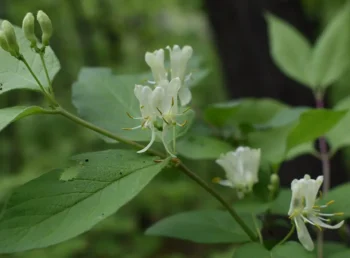
Manchurian Honeysuckle: A Non-Native Shrub Worth Considering (With Caution)
If you’ve been exploring shrubs for your garden and stumbled across Manchurian honeysuckle, you’re looking at a plant with quite the story to tell. This deciduous shrub, scientifically known as Lonicera ruprechtiana, hails from the far reaches of Northeast Asia and has made itself at home in parts of the American Midwest and Northeast.
What Is Manchurian Honeysuckle?
Manchurian honeysuckle is a perennial, multi-stemmed woody shrub that typically grows to about 13-16 feet in height, though it can sometimes stretch taller or remain more compact depending on growing conditions. As a member of the honeysuckle family, it shares that characteristic tubular flower shape that gardeners either love or have complicated feelings about.
Where You’ll Find It Growing
Originally from Manchuria, eastern Russia, Korea, and northern China, this honeysuckle has established populations in several U.S. states, including Illinois, Indiana, Michigan, New York, and Ohio. It’s what botanists call a non-native species that reproduces on its own in the wild without human intervention.
- Species observed
- No observations
The Good, The Bad, and The Beautiful
Here’s where things get interesting with Manchurian honeysuckle. On the aesthetic side, it’s genuinely attractive:
- Produces white to pale yellow tubular flowers in late spring to early summer
- Develops bright red berries that add color to fall landscapes
- Features oval, deciduous leaves that provide seasonal interest
- Attracts pollinators like bees and butterflies to its blooms
However, as with many non-native honeysuckles, there are considerations to keep in mind. While this particular species’ invasive status isn’t definitively established in all regions, honeysuckles as a group have a reputation for being vigorous spreaders.
Growing Conditions and Care
If you decide to grow Manchurian honeysuckle, you’ll find it refreshingly adaptable. This shrub thrives in USDA hardiness zones 3-7, making it suitable for a wide range of climates. It’s not particularly fussy about growing conditions:
- Tolerates various soil types
- Grows in partial shade to full sun
- Prefers moderate moisture levels
- Generally low maintenance once established
Planting and Maintenance Tips
Manchurian honeysuckle is relatively straightforward to grow, but here are some key points to ensure success:
- Plant in spring or fall when temperatures are moderate
- Provide regular watering during the first growing season
- Mulch around the base to retain moisture and suppress weeds
- Prune as needed to control size and shape, ideally in late winter
- Monitor for excessive spreading and remove unwanted seedlings
Garden Design Considerations
This shrub works well in woodland gardens, wildlife habitats, and naturalized landscapes where its informal growth habit can shine. The flowers provide nectar for pollinators, while the berries feed birds later in the season. However, given its non-native status and potential for self-seeding, consider placement carefully.
Native Alternatives to Consider
Before committing to Manchurian honeysuckle, you might want to explore native alternatives that provide similar benefits without the ecological concerns:
- American elderberry (Sambucus canadensis) for wildlife value
- Spicebush (Lindera benzoin) for early spring flowers
- Native viburnums for berries and fall color
- Coral honeysuckle (Lonicera sempervirens) for a native honeysuckle option
The Bottom Line
Manchurian honeysuckle can be an attractive addition to the right garden setting, offering flowers for pollinators and berries for birds. However, its non-native status means it’s worth proceeding thoughtfully. If you choose to plant it, monitor its behavior in your landscape and be prepared to manage any aggressive spreading. For most gardeners, exploring native alternatives might provide similar benefits with fewer long-term concerns.
Remember, the best garden is one that reflects both your aesthetic preferences and your local ecosystem’s needs. Whatever you choose, happy gardening!