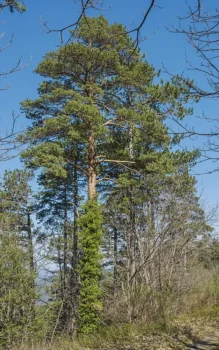
Maritime Pine: A Mediterranean Beauty for Coastal Gardens
If you’re dreaming of bringing a touch of Mediterranean charm to your landscape, the maritime pine might just be the tree you’re looking for. With its distinctive reddish bark and impressive stature, this fast-growing conifer has caught the attention of gardeners in coastal regions across the United States.
What is Maritime Pine?
Maritime pine (Pinus pinaster) is a perennial, woody tree that typically grows as a single-stemmed specimen reaching impressive heights of 13 feet or more. This evergreen conifer hails from the Mediterranean region, where it naturally thrives in the coastal areas of Portugal, Spain, southern France, and northwestern Africa.
Where Does Maritime Pine Grow in the US?
Currently, maritime pine has established populations in Hawaii, North Carolina, and Oregon. As a non-native species that reproduces spontaneously in the wild, it has managed to persist in these areas without human intervention. While it’s found in both the lower 48 states and Hawaii, its distribution remains relatively limited.
- Species observed
- No observations
Why Consider Maritime Pine for Your Garden?
Maritime pine brings several appealing qualities to the landscape:
- Striking appearance: The tree’s reddish-brown bark develops deep furrows as it matures, creating visual interest year-round
- Fast growth: If you’re looking for relatively quick results, this species delivers
- Bright green foliage: Long needles arranged in pairs provide lush, evergreen color
- Distinctive cones: Oval-shaped cones add architectural interest
- Coastal tolerance: Excellent choice for seaside gardens where salt spray is a concern
Garden Roles and Landscape Uses
Maritime pine works beautifully as:
- A specimen tree for large properties
- Windbreak or privacy screen
- Erosion control on slopes
- Coastal landscape focal point
- Mediterranean or xeriscape garden centerpiece
Growing Conditions and Care
Maritime pine is surprisingly low-maintenance once you understand its preferences:
Sunlight: Full sun is essential for healthy growth
Soil: Well-draining sandy or loamy soils work best, though it tolerates poor soil conditions
Water: Drought tolerant once established, but needs regular watering during its first year
Climate: Thrives in USDA hardiness zones 7-10
Planting and Care Tips
- Plant in spring for best establishment
- Allow plenty of space – these trees get large!
- Water consistently during the first growing season
- Minimal pruning required – let it develop its natural form
- Mulch around the base to retain moisture and suppress weeds
Wildlife and Pollinator Considerations
As a wind-pollinated conifer, maritime pine doesn’t offer significant direct benefits to pollinators like bees and butterflies. However, mature trees can provide nesting sites and shelter for various bird species.
Things to Consider
Before planting maritime pine, keep these factors in mind:
- Size matters: These trees grow quite large, so ensure you have adequate space
- Non-native status: While not currently listed as invasive, it’s worth considering native alternatives
- Limited range: Best suited for coastal and Mediterranean-style climates
Native Alternatives to Consider
If you’re interested in supporting local ecosystems, consider these native pine alternatives:
- Eastern White Pine (Pinus strobus) for eastern regions
- Ponderosa Pine (Pinus ponderosa) for western areas
- Longleaf Pine (Pinus palustris) for southeastern coastal regions
The Bottom Line
Maritime pine can be a stunning addition to the right landscape – particularly if you’re gardening in coastal areas within zones 7-10 and have space for a large tree. Its Mediterranean heritage makes it perfect for water-wise gardens and coastal settings. While it’s not native to North America, its current status suggests it can be grown responsibly in appropriate climates. Just remember to give it plenty of room to spread its branches and show off that gorgeous bark!