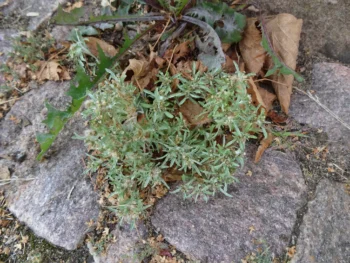
Marsh Cudweed: A Humble Ground Cover for Challenging Spots
If you’ve ever noticed a small, silvery-leafed plant quietly carpeting disturbed soil or filling in gaps where other plants struggle, you might have encountered marsh cudweed (Gnaphalium uliginosum). This unassuming annual herb has a knack for thriving in places where many garden favorites fear to tread.
What is Marsh Cudweed?
Marsh cudweed is a low-growing annual forb that belongs to the sunflower family. Despite its common name, you’ll also find it listed under the synonym Filaginella uliginosa in some botanical references. This humble plant is characterized by its soft, woolly appearance and tiny, inconspicuous flowers that seem to huddle together along the stems.
As a forb, marsh cudweed lacks the woody stems of shrubs and trees, instead producing herbaceous growth that completes its entire life cycle within a single growing season. The plant’s silvery-gray foliage is covered in fine, soft hairs that give it a distinctly fuzzy texture and help it retain moisture.
Where Does It Come From?
Here’s where things get interesting: marsh cudweed isn’t actually native to North America. This European and Asian native has made itself quite at home across our continent, establishing populations that reproduce and persist without human intervention. You’ll find it growing wild from Alaska down to the lower 48 states, and from coast to coast across Canada.
The plant has spread to an impressive range of locations, including Alberta, British Columbia, Alaska, Manitoba, and numerous U.S. states from Maine to California. It’s become particularly established in areas with disturbed or challenging growing conditions.
- Species observed
- No observations
Growing Habits and Appearance
Don’t expect marsh cudweed to make a bold statement in your garden—this plant is all about subtle charm. It typically grows as a low, spreading mat that rarely reaches more than a few inches tall. The small, clustered flowers are more functional than showy, appearing as tiny white or yellowish heads that blend into the silvery foliage.
What marsh cudweed lacks in visual drama, it makes up for in adaptability. This annual has a remarkable ability to colonize disturbed soils and areas where other plants struggle to establish.
Where and How It Grows
One of the most fascinating aspects of marsh cudweed is its variable relationship with water. Depending on where you are in North America, this plant behaves quite differently:
- In Alaska, it’s considered an obligate upland plant, almost never found in wetlands
- In most other regions, it’s facultative, meaning it can grow happily in both wet and dry conditions
This flexibility makes it suitable for USDA hardiness zones 3-9, though as an annual, it’s more limited by growing season length than winter temperatures. The plant prefers full sun to partial shade and has a particular talent for thriving in poor, disturbed, or compacted soils that challenge other species.
Should You Plant Marsh Cudweed?
The answer depends on what you’re trying to achieve in your garden. Marsh cudweed can serve as a useful ground cover for problem areas—those spots with poor drainage, compacted soil, or where foot traffic has left bare patches. It’s particularly handy for naturalized areas or informal cottage garden settings where a wild look is desirable.
The plant does provide some benefits to small beneficial insects, though it’s not considered a major pollinator plant. If you’re looking to support local wildlife, you might want to consider native alternatives that offer more substantial benefits to your regional ecosystem.
Native Alternatives to Consider
While marsh cudweed isn’t invasive, choosing native ground covers can provide greater ecological benefits. Consider these native options depending on your region:
- Wild strawberry (Fragaria species) for shaded areas
- Native sedges (Carex species) for wet or challenging soils
- Local native asters for pollinator support
- Regional native grasses for erosion control
If You Choose to Grow It
Marsh cudweed is refreshingly low-maintenance. As an annual that readily self-sows, it requires minimal intervention once established. Simply scatter seeds in spring over prepared soil, keep the area moderately moist until germination, and then let nature take its course.
The plant will typically germinate, grow, flower, set seed, and die all within one growing season. In favorable conditions, you can expect it to self-sow and return the following year, though populations may fluctuate based on weather conditions and soil disturbance.
The Bottom Line
Marsh cudweed is one of those quiet achievers in the plant world—not flashy, but reliable and adaptable. While it may not be the star of your garden, it can play a useful supporting role in challenging locations. Just remember that as a non-native species, it won’t provide the same ecosystem benefits as native plants, so consider it as one tool in your gardening toolkit rather than a primary choice for wildlife habitat.
Whether you welcome marsh cudweed or prefer to encourage native alternatives, understanding these humble plants helps us make more informed decisions about the green spaces we tend.