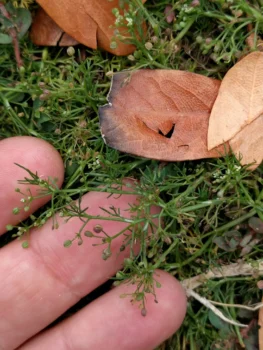
Marsh Parsley: A Delicate Non-Native with Mixed Garden Appeal
If you’ve ever noticed a delicate, feathery plant with tiny white flowers popping up in disturbed areas or along pathways, you might have encountered marsh parsley (Cyclospermum leptophyllum). This diminutive annual herb has quietly made itself at home across much of the United States, despite being a South American native. But should you welcome it into your garden? Let’s explore what makes this little plant tick.
What Is Marsh Parsley?
Marsh parsley goes by several names, including fine-leaved celery and fir-leaved celery, which give you a hint about its delicate, thread-like foliage. As an annual forb (that’s garden-speak for a non-woody plant that completes its life cycle in one year), it’s a member of the carrot family, though you won’t want to toss it in your salad.
This petite plant produces clusters of tiny white flowers arranged in umbrella-like formations called umbels—a classic characteristic of the carrot family. The finely divided leaves give the plant an almost ethereal, lacy appearance that some gardeners find charming.
Where Does Marsh Parsley Grow?
Originally from South America (specifically Argentina, Uruguay, and southern Brazil), marsh parsley has become quite the world traveler. In the United States, it has established populations across a surprisingly wide range of states, from Alabama and Arizona to Virginia and West Virginia, plus Hawaii, Puerto Rico, and the U.S. Virgin Islands.
- Species observed
- No observations
The plant shows remarkable adaptability to different moisture conditions. While it can handle both wet and dry sites in most regions, it tends to prefer drier conditions in the Western Mountains, Valleys, and Coast region.
Garden Appeal: The Good and the Challenging
Marsh parsley occupies an interesting niche in the garden world. On the positive side, its delicate texture and small white flowers can add a soft, naturalistic touch to cottage gardens or wildflower areas. The plant is remarkably low-maintenance, tolerating poor soils and requiring minimal care once established.
However, there’s a flip side to consider. This plant is a prolific self-seeder, which means it can pop up where you least expect it. Some gardeners appreciate this spontaneous quality, while others find it a bit too enthusiastic for their taste.
Growing Conditions and Care
If you decide to give marsh parsley a try, you’ll find it refreshingly undemanding:
- Sunlight: Full sun to partial shade
- Soil: Adapts to various soil types, including poor or disturbed soils
- Water: Moderate moisture; quite drought-tolerant once established
- USDA Zones: Primarily zones 8-11, but as an annual, it can grow in cooler zones from seed
Care requirements are minimal—perhaps too minimal for some gardeners’ liking. The plant readily self-seeds and can establish in areas with minimal soil preparation. If you’re trying to maintain a highly controlled garden design, you’ll need to stay on top of removing unwanted seedlings.
Wildlife and Pollinator Benefits
The small white flowers do attract tiny beneficial insects, though marsh parsley isn’t considered a major pollinator magnet compared to native alternatives. Its role in supporting local wildlife is relatively modest.
Should You Plant Marsh Parsley?
This is where things get interesting. While marsh parsley isn’t classified as invasive or noxious, it is a non-native species that has naturalized widely. For gardeners focused on supporting local ecosystems, there are compelling native alternatives to consider:
- Native members of the carrot family like wild carrot (where appropriate)
- Native annual wildflowers that provide similar delicate texture
- Regional native plants that offer better wildlife support
If you appreciate marsh parsley’s low-maintenance nature and delicate appearance, and you’re comfortable with its self-seeding tendencies, it can work in naturalized areas or cottage-style gardens. Just be prepared to manage its enthusiasm for spreading, and consider whether native alternatives might better serve your local ecosystem.
The Bottom Line
Marsh parsley is one of those plants that falls into gardening’s gray area—not problematic enough to avoid entirely, but not outstanding enough to actively seek out. If it shows up in your garden naturally, you can appreciate its modest charms while keeping an eye on its spreading habits. If you’re planning a new planting, though, consider exploring native alternatives that offer similar aesthetic appeal with greater ecological benefits.
Whether you embrace it or gently discourage it, marsh parsley serves as a reminder that some of our most common garden companions are quiet immigrants, adapting and persisting in ways that continue to surprise us.