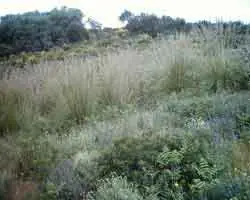
Mauritanian Grass: A Mediterranean Marvel for Drought-Tolerant Gardens
If you’re looking to add some serious drama to your drought-tolerant landscape, Mauritanian grass (Ampelodesmos) might just be the showstopper you’ve been searching for. This impressive perennial grass brings a touch of Mediterranean flair to American gardens, though it comes with some important considerations worth discussing.
What is Mauritanian Grass?
Mauritanian grass is a large, clumping perennial grass that originally hails from the Mediterranean region of North Africa and Southern Europe. As a graminoid plant, it shares characteristics with other grasses, sedges, and rushes, but stands out for its particularly robust and architectural appearance.
This non-native species has found its way to California, where it reproduces spontaneously in the wild without human intervention. While it’s established itself in the Golden State’s landscape, gardeners should be aware of its non-native status when making planting decisions.
- Species observed
- No observations
Why Consider (or Not Consider) Mauritanian Grass
Let’s be honest about the pros and cons of this Mediterranean import:
The Appeal
- Dramatic height and presence that creates instant impact
- Excellent drought tolerance once established
- Low maintenance requirements
- Feathery, ornamental plumes add texture and movement
- Perfect for erosion control on slopes
The Considerations
- Non-native status means it doesn’t support local ecosystems like native plants do
- Can self-seed and spread beyond intended areas
- Limited wildlife and pollinator benefits compared to native grasses
- Takes up significant space in the garden
Where Mauritanian Grass Thrives
This Mediterranean native feels right at home in USDA hardiness zones 8 through 11, making it suitable for warmer regions of the United States. It’s particularly well-suited for:
- Mediterranean-style gardens and landscapes
- Modern, contemporary outdoor spaces
- Drought-tolerant and xerophytic gardens
- Slope stabilization projects
- Large-scale landscape installations
Growing Mauritanian Grass Successfully
If you decide to grow Mauritanian grass, here’s how to set it up for success:
Planting Requirements
- Sun: Full sun exposure for best growth and flowering
- Soil: Well-draining soil is essential; this grass won’t tolerate waterlogged conditions
- Space: Give it plenty of room to reach its full potential
- Timing: Plant in spring after the last frost
Care and Maintenance
One of Mauritanian grass’s biggest selling points is its low-maintenance nature:
- Water regularly during the first growing season to establish roots
- Once established, it’s remarkably drought-tolerant
- Cut back annually in late winter or early spring
- No fertilization typically needed in most soils
- Monitor for self-seeding if you want to control its spread
Native Alternatives to Consider
While Mauritanian grass certainly has its merits, consider these native alternatives that provide similar aesthetic appeal while supporting local wildlife:
- Big bluestem (Andropogon gerardii) for prairie-style gardens
- Purple needlegrass (Stipa pulchra) – California’s state grass
- Deer grass (Muhlenbergia rigens) for Southwestern landscapes
- Switch grass (Panicum virgatum) for versatile, four-season interest
The Bottom Line
Mauritanian grass is undeniably striking and well-suited to water-wise gardens in warmer climates. However, as responsible gardeners, we should weigh its ornamental benefits against its non-native status. If you choose to grow it, do so thoughtfully, monitor its spread, and consider incorporating native grasses elsewhere in your landscape to support local ecosystems.
Whether you go with Mauritanian grass or opt for a native alternative, the key is creating a garden that’s both beautiful and mindful of its environmental impact. After all, the best gardens are those that look gorgeous while playing nicely with their surrounding ecosystem.