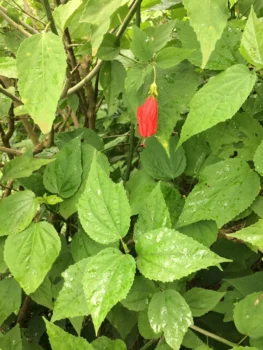
Mazapan: A Hummingbird Magnet for Warm Climate Gardens
If you’re looking to attract hummingbirds to your garden and live in a warm climate, you might want to consider mazapan (Malvaviscus penduliflorus). This perennial shrub, also known by its botanical synonyms, offers unique red blooms that never fully open – a quirky characteristic that makes it instantly recognizable in the landscape.
What is Mazapan?
Mazapan is a multi-stemmed woody shrub that typically grows to about 13-16 feet tall, though it can sometimes reach greater heights under ideal conditions. This perennial plant produces several stems from near the ground, creating a full, bushy appearance that works well as a specimen plant or informal hedge.
The most distinctive feature of mazapan is its bright red, tubular flowers that remain in a perpetual bud-like state – they never fully open like typical hibiscus flowers. These unique blooms are complemented by glossy, heart-shaped green leaves that provide year-round interest.
Where Does Mazapan Grow?
Originally native to Mexico and Central America, mazapan is now established in several U.S. locations including Florida, Hawaii, and Texas, as well as in Guam, Palau, and Puerto Rico. As a non-native species, it has adapted well to these warm climates and reproduces on its own in the wild.
- Species observed
- No observations
Growing Conditions and Care
Mazapan thrives in USDA hardiness zones 9-11, making it suitable for tropical and subtropical gardens. Here’s what you need to know about successfully growing this shrub:
- Light: Full sun to partial shade
- Soil: Well-draining soil of average fertility
- Water: Moderate, consistent watering
- Climate: Warm, frost-free areas
The plant shows different moisture preferences depending on the region. In some areas, it can tolerate both wet and dry conditions, while in others (particularly the Caribbean), it prefers upland, drier sites.
Garden Design and Landscape Use
Mazapan works beautifully in several garden settings:
- Hummingbird and butterfly gardens
- Tropical and subtropical landscapes
- Informal hedges or screens
- Specimen plantings
- Mixed shrub borders
Its year-round blooming habit and evergreen foliage make it a reliable performer in warm climate gardens.
Wildlife Benefits
The tubular red flowers are perfectly designed for hummingbird feeding, and these tiny birds are the primary pollinators. The nectar-rich blooms also attract butterflies, adding movement and life to your garden throughout the growing season.
Should You Plant Mazapan?
While mazapan can be an attractive addition to warm climate gardens, it’s worth considering that this is a non-native plant. If you’re focused on supporting local ecosystems, you might want to explore native alternatives that provide similar benefits to wildlife.
If you do choose to plant mazapan, ensure you source it responsibly and monitor its growth to prevent unwanted spread beyond your garden boundaries. Regular pruning can help maintain its size and shape while keeping it contained.
Planting and Care Tips
- Plant in spring after the last frost date
- Space plants 6-8 feet apart for hedging
- Water regularly during establishment, then reduce to moderate watering
- Prune lightly to maintain shape and encourage bushy growth
- Protect from frost in zone 9 gardens
- Fertilize occasionally during the growing season
With proper care, mazapan can provide years of reliable blooms and serve as a focal point for hummingbird activity in your garden. Just remember to research native alternatives that might provide similar benefits while supporting your local ecosystem.