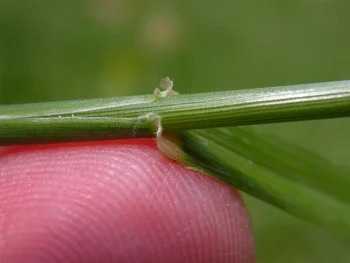
Meadow Fescue: A European Grass That’s Made Itself at Home
If you’ve ever wondered about that sturdy-looking grass growing in pastures, roadsides, and naturalized areas across North America, you might be looking at meadow fescue (Schedonorus pratensis). This European native has become a familiar sight from coast to coast, though it raises some interesting questions for gardeners considering it for their landscapes.
What Exactly Is Meadow Fescue?
Meadow fescue is a perennial cool-season grass that forms loose bunches rather than spreading into dense mats. Also known by its botanical synonyms Festuca pratensis and Lolium pratense, this hardy grass typically reaches about 2 feet in height with a somewhat coarse texture and medium-green foliage.
The plant blooms in early summer with inconspicuous yellow flowers that aren’t particularly showy—after all, this is a wind-pollinated grass, not a pollinator magnet. Its brown seeds are produced abundantly from summer through fall, though they don’t persist long once they hit the ground.
Where You’ll Find It Growing
Originally from Europe and Asia, meadow fescue has established itself as a non-native species throughout most of North America. You can find it thriving in nearly every U.S. state and Canadian province, from Alaska down to Florida and from coast to coast. It’s particularly common in agricultural areas, roadsides, and disturbed sites where it reproduces without human intervention.
- Species observed
- No observations
The Growth Habit Breakdown
This grass is what you’d call a moderate achiever—it grows at a moderate rate during its active growing season of summer and fall. Here are the key characteristics:
- Height: Reaches about 2 feet at maturity
- Growth form: Bunch-type grass with a decumbent (somewhat sprawling) shape
- Lifespan: Relatively short for a perennial
- Regrowth: Slow to bounce back after cutting or grazing
- Winter appearance: Foliage becomes porous and less dense
Growing Conditions and Hardiness
Meadow fescue is surprisingly particular about its growing conditions despite its widespread presence. It thrives in USDA hardiness zones 3-8, handling temperatures as low as -23°F. The grass prefers:
- Medium-textured soils (not too sandy, not too clay-heavy)
- pH between 5.5 and 8.5
- High fertility requirements
- Moderate moisture levels
- Areas receiving 33-50 inches of precipitation annually
- At least 120 frost-free days
- Intermediate shade tolerance
The plant typically prefers upland conditions but can occasionally tolerate wetland edges across all regions where it grows.
Should You Plant Meadow Fescue?
Here’s where things get a bit complicated. While meadow fescue isn’t widely considered invasive, it does have noxious weed status with seed restrictions in at least one state. As a non-native species, it’s worth considering whether it’s the best choice for your landscape goals.
Meadow fescue might work for you if you’re looking for:
- Erosion control on disturbed sites
- Low-maintenance grass for naturalized areas
- Pasture or hay production (its traditional use)
- A hardy grass for challenging growing conditions
However, you might want to skip it if you’re aiming for:
- Ornamental landscaping (it’s not particularly attractive)
- Wildlife habitat (limited benefits for native fauna)
- Pollinator gardens (wind-pollinated with minimal insect value)
- Supporting local ecosystems with native plants
Native Alternatives to Consider
If you’re interested in the practical benefits of meadow fescue but want to support native ecosystems, consider these alternatives:
- Buffalo grass (Bouteloua dactyloides) for drought-prone areas
- Little bluestem (Schizachyrium scoparium) for ornamental native grass appeal
- Canada wildrye (Elymus canadensis) for erosion control
- Blue grama (Bouteloua gracilis) for low-maintenance groundcover
Planting and Care Tips
If you do decide to plant meadow fescue, here’s what you need to know:
Planting: Seeds are routinely available commercially, with about 250,000 seeds per pound. Fall or early spring seeding works best, and seedlings show high vigor once established.
Establishment: Be patient—this grass has a slow spread rate and takes time to fill in areas. It’s propagated only by seed, not by vegetative methods.
Maintenance: Once established, meadow fescue requires minimal care in suitable conditions. It has medium drought tolerance and moderate fire tolerance, though it won’t resprout after fire damage.
Soil preparation: Ensure good fertility, as this grass has high nutrient requirements. Root depth reaches at least 12 inches, so prepare soil accordingly.
The Bottom Line
Meadow fescue is a practical, if unexciting, grass that serves specific purposes in agriculture and land management. While it’s not invasive in most areas, its non-native status and limited ecological benefits make it worth questioning whether it’s the right choice for home landscapes. If you’re looking for erosion control or low-maintenance grass for utilitarian purposes, it can do the job—but consider native alternatives that offer the same benefits while supporting local wildlife and ecosystems.
Remember, the best landscape choices are often the ones that work with, rather than against, your local environment. Sometimes that means looking beyond the familiar to discover the native treasures that have been growing in your region all along.