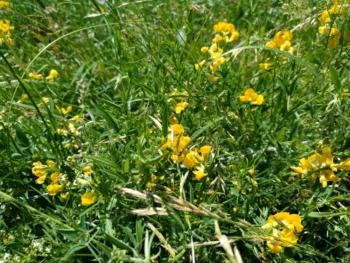
Meadow Pea: A Cheerful Yellow Bloomer for Casual Gardens
If you’re looking for a low-maintenance perennial that brings sunny yellow flowers to your garden without much fuss, meadow pea (Lathyrus pratensis) might catch your eye. This hardy little climber has been making itself at home in North American gardens and wild spaces for quite some time, though it originally hails from across the pond.
What Exactly Is Meadow Pea?
Meadow pea is a perennial forb—basically a non-woody plant that comes back year after year. It’s part of the pea family, which explains its cheerful yellow pea-like flowers and its tendency to climb using delicate tendrils. Unlike some of its more aggressive relatives, meadow pea has a relatively gentle presence in the garden, spreading at a moderate pace without completely taking over.
Where Does It Grow?
Originally from Europe and western Asia, meadow pea has established itself across much of North America. You’ll find it growing in Alaska, throughout Canada (British Columbia, New Brunswick, Nova Scotia, Ontario, Prince Edward Island, Quebec, and Newfoundland), and in numerous U.S. states including Connecticut, Illinois, Kentucky, Maine, Massachusetts, Michigan, New Hampshire, New Jersey, New York, Ohio, Vermont, Virginia, Washington, and Wisconsin.
- Species observed
- No observations
The Appeal Factor
What makes meadow pea appealing is its unpretentious charm. The bright yellow flowers appear in small clusters from late spring through summer, creating a cottage garden vibe wherever they grow. The compound leaves with their narrow leaflets add a delicate texture, and the plant’s climbing habit means it can scramble over low shrubs or trail along the ground as a living mulch.
Garden Role and Landscape Uses
Meadow pea works beautifully in:
- Wildflower meadows and naturalized areas
- Cottage gardens where a relaxed look is desired
- As ground cover in informal settings
- Mixed perennial borders for added texture and color
- Areas where you want something that looks good but doesn’t need babying
Growing Conditions and Care
One of meadow pea’s best qualities is its easygoing nature. It’s quite content in average to poor soils—in fact, rich soil might make it too leafy at the expense of flowers. Here’s what it prefers:
- Sunlight: Full sun to partial shade
- Soil: Well-draining, average to poor fertility
- Water: Drought tolerant once established
- Hardiness: USDA zones 3-8
- Wetland preference: Generally prefers upland sites, though it can occasionally tolerate some moisture
Planting and Maintenance Tips
Getting meadow pea started is pretty straightforward:
- Sow seeds directly in spring or fall—they often germinate better with some cold treatment
- Space plants about 12-18 inches apart if planting transplants
- Water regularly the first season, then let nature take over
- Deadhead if you want to prevent self-seeding, or let it go if you like a naturalized look
- No fertilizer needed—it can actually fix its own nitrogen like other legumes
Wildlife and Pollinator Benefits
The bright yellow flowers are quite attractive to bees, butterflies, and other small pollinators looking for nectar and pollen. As a member of the pea family, it’s particularly valuable for bees that specialize in buzz pollination.
Should You Plant It?
Meadow pea is a perfectly pleasant garden addition if you’re looking for something low-maintenance with cheerful flowers. Since it’s not native to North America, you might also consider supporting local ecosystems by choosing native alternatives like wild lupine (Lupinus perennis) or partridge pea (Chamaecrista fasciculata), which offer similar pea-family benefits but with the added advantage of being part of our natural heritage.
If you do choose meadow pea, you’ll likely find it to be a reliable, undemanding garden companion that brings a touch of European meadow charm to your landscape. Just keep an eye on its self-seeding tendencies if you prefer a more controlled garden aesthetic.