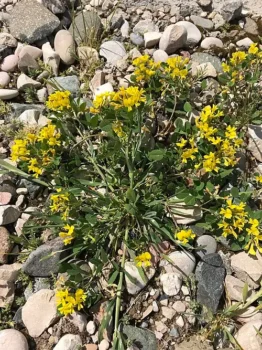
Medick (Medicago monantha): A Small but Sturdy Non-Native Annual
If you’ve stumbled across the name medick in your gardening adventures, you might be wondering what exactly this little plant brings to the table. Medicago monantha, commonly known as medick, is a non-native annual that has quietly established itself in parts of the United States, particularly in Massachusetts.
What Is Medick?
Medick is an annual forb, which is just a fancy way of saying it’s a non-woody plant that completes its life cycle in one year. As a member of the legume family, this small plant has the neat trick of fixing nitrogen in the soil through its root system – basically, it’s nature’s little fertilizer factory.
Also known by its synonym Trigonella neoana, medick is originally from Mediterranean regions but has found its way to North American shores and decided to stick around.
Where You’ll Find Medick
Currently, Medicago monantha has been documented growing wild in Massachusetts, though it may be present in other areas as well. This hardy little plant has proven capable of reproducing spontaneously without human intervention.
- Species observed
- No observations
Should You Grow Medick in Your Garden?
Here’s where things get interesting. While medick isn’t considered invasive or harmful, it’s also not a native species. If you’re committed to supporting local ecosystems with native plants, you might want to consider native alternatives instead.
However, if you’re looking for a low-maintenance annual that can help improve soil nitrogen levels, medick does have some practical benefits:
- Nitrogen fixation improves soil fertility
- Small yellow flowers provide nectar for tiny pollinators
- Low maintenance once established
- Good for naturalized areas or meadow gardens
Growing Conditions and Care
If you decide to give medick a try, you’ll find it’s fairly easygoing. Like many Mediterranean plants, it prefers:
- Full sun exposure
- Well-draining soils
- Minimal supplemental watering once established
As an annual, medick will complete its life cycle in one growing season, but it may self-seed if conditions are right.
Consider Native Alternatives
While medick isn’t problematic, supporting native plant communities is always a great choice for local wildlife and ecosystems. Consider these native alternatives that offer similar benefits:
- Wild lupine for nitrogen fixation and pollinator support
- Partridge pea for annual color and soil improvement
- Native clovers for ground cover and wildlife benefits
The Bottom Line
Medick is a perfectly harmless little plant that won’t cause trouble in your garden, but it’s not going to wow you with spectacular blooms or provide significant wildlife benefits either. If you’re managing a naturalized area and want something that fixes nitrogen while asking for very little in return, medick might fit the bill. Just remember that choosing native plants when possible helps create stronger, more resilient local ecosystems.