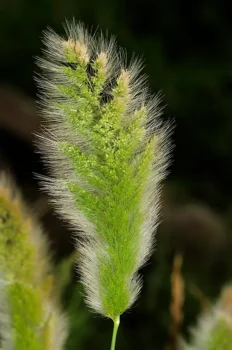
Mediterranean Rabbitsfoot Grass: A Wetland Grass with Feathery Appeal
If you’ve ever wondered about that delicate, feathery grass growing near ponds or in consistently moist areas, you might be looking at Mediterranean rabbitsfoot grass (Polypogon maritimus). This small annual grass has quite the story to tell, and whether it belongs in your garden depends entirely on what kind of gardening adventure you’re after.
What is Mediterranean Rabbitsfoot Grass?
Mediterranean rabbitsfoot grass is exactly what its name suggests – a grass with soft, rabbit-tail-like seed heads that originated in the Mediterranean region. As an annual grass, it completes its entire life cycle in just one growing season, sprouting from seed, flowering, setting seed, and dying all within the same year.
This graminoid (that’s botanist-speak for grass-like plants) produces delicate, silvery-white to pale green panicles that give it an almost ethereal appearance when they catch the light. The fluffy seed heads are what really steal the show, creating a soft, textural element that can add interest to the right setting.
Where Does It Grow?
Originally from Europe, the Mediterranean, and parts of Asia and Africa, this grass has made itself at home in several U.S. states including California, Florida, Georgia, Nevada, and South Carolina. It’s what botanists call a naturalized species – meaning it arrived here from somewhere else but now reproduces on its own without human help.
- Species observed
- No observations
The Wetland Connection
Here’s where things get interesting: Mediterranean rabbitsfoot grass is almost exclusively a wetland plant. Depending on the region, it’s classified as either an obligate wetland species (meaning it almost always grows in wetlands) or facultative wetland (usually in wetlands but occasionally elsewhere). This grass has a particular fondness for:
- Consistently moist to wet soils
- Areas that experience periodic flooding
- Saline or alkaline conditions
- Pond margins and marsh edges
- Areas with salt spray exposure
Should You Plant It?
This is where things get a bit nuanced. Mediterranean rabbitsfoot grass isn’t native to North America, which means it’s not supporting our local ecosystems in the same way native plants would. However, it’s also not currently listed as invasive or noxious, so it’s not causing known ecological harm.
If you’re drawn to its delicate beauty and have the right growing conditions, it could work in specific situations like:
- Wetland restoration projects (though native species are preferred)
- Rain gardens or bioswales
- Pond or water feature margins
- Areas with challenging wet, salty conditions
Consider Native Alternatives
Before settling on Mediterranean rabbitsfoot grass, consider these native wetland grasses that offer similar benefits while supporting local wildlife:
- Saltgrass (Distichlis spicata) for saline conditions
- Alkali sacaton (Sporobolus airoides) for alkaline soils
- Various native sedges (Carex species) for wetland edges
- Native rush species (Juncus) for pond margins
Growing Mediterranean Rabbitsfoot Grass
If you decide this grass fits your specific needs, here’s what you need to know:
Growing Conditions: This grass is all about the water. It needs consistently moist to wet soil and won’t tolerate drought. It actually thrives in conditions that would spell doom for many other plants – think boggy, occasionally flooded areas with high salt content.
Sunlight: Full sun is preferred, though it can handle some light shade.
Soil: Adaptable to various soil types as long as they stay moist, but particularly tolerant of saline and alkaline conditions.
Planting: Since it’s an annual, you’ll be working with seeds. Plant in spring when soil temperatures warm up. The seeds need consistent moisture to germinate.
Care: Minimal care required once established, provided moisture needs are met. It will self-seed readily in suitable conditions, so expect it to return next year if conditions remain favorable.
The Bottom Line
Mediterranean rabbitsfoot grass is a specialized plant for specialized conditions. If you have a wetland garden, pond margin, or other consistently wet area that needs some soft, textural interest, and native options aren’t readily available, this grass could work. However, always consider native alternatives first – they’ll provide better support for local wildlife while often being better adapted to regional conditions.
Remember, successful gardening is about matching the right plant to the right place, and for Mediterranean rabbitsfoot grass, that place is definitely on the soggy side of life!