Non-native Plants

Mediterranean Tapeweed

Posidonia oceanica

USDA symbol: POOC8

perennial forb

Lower 48 states: non-native, naturalized
Puerto Rico: non-native, naturalized

If you’ve stumbled upon information about Mediterranean tapeweed (Posidonia oceanica) while planning your garden, you might be in for a bit of a surprise. This isn’t your typical backyard plant – in fact, it’s not a land plant at all! Mediterranean tapeweed is actually a marine seagrass that calls the ...

Mediterranean Tapeweed: The Marine Plant That’s Not for Your Garden

If you’ve stumbled upon information about Mediterranean tapeweed (Posidonia oceanica) while planning your garden, you might be in for a bit of a surprise. This isn’t your typical backyard plant – in fact, it’s not a land plant at all!

What Is Mediterranean Tapeweed?

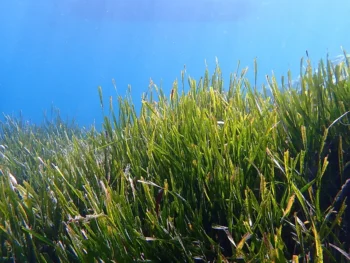
Mediterranean tapeweed is actually a marine seagrass that calls the Mediterranean Sea home. Despite its common name suggesting it might be a terrestrial weed, this perennial plant lives entirely underwater, forming vast meadows on the seafloor. It’s a fascinating example of how plants have adapted to life beneath the waves.

Where Does It Actually Grow?

This marine marvel is native to the Mediterranean Sea, where it creates some of the most important underwater ecosystems in the world. You’ll find it growing in shallow coastal waters from Spain to Turkey, forming dense underwater prairies that can live for thousands of years.

  • Species observed
  • No observations

Why You Won’t Find It in Garden Centers

Here’s where things get interesting – and why you won’t be adding this to your shopping list for the local nursery:

  • It requires saltwater to survive
  • It needs to be completely submerged underwater
  • It has specialized roots (called rhizomes) that anchor it to sandy seafloors
  • It depends on ocean currents for nutrient distribution

The Case of Mistaken Identity

Sometimes plant databases can contain confusing or conflicting information. While some sources might suggest this plant grows in places like Texas or Puerto Rico as a terrestrial species, this appears to be a case of mistaken identity or database confusion. The true Posidonia oceanica is exclusively a Mediterranean marine species.

What This Means for Your Garden

If you were hoping to grow Mediterranean tapeweed in your garden, you’ll need to look elsewhere! However, if you’re interested in plants with similar aesthetic qualities or ecological benefits, consider these terrestrial alternatives:

  • Native grasses that create flowing, meadow-like textures
  • Wetland plants if you have a water feature or pond
  • Native sedges for areas with consistent moisture

The Bottom Line

Mediterranean tapeweed is an incredible plant – just not for your backyard! It plays a crucial role in marine ecosystems, providing habitat for fish, preventing coastal erosion, and producing oxygen. While you can’t grow it in your garden, you can certainly appreciate it for what it is: one of nature’s most important underwater gardeners.

If you’re planning a garden and looking for plants with interesting textures and ecological benefits, stick to terrestrial species native to your area. Your local extension office can help you find the perfect plants that will thrive in your specific location and growing conditions.

Posidonia oceanica is also known as...

Often we refer to plants by their common names. When shopping for plants the scientific name is the best way to positively identify the plant species you desire. But some plants have more than one name! While it doesn't happen often, nurseries might display one name while you're searching for another. Posidonia oceanica is also known as:

Posidonia oceania Delile, database artifact | USDA symbol: POOC3

Why do some plants have more than one name? Over time plant species may be renamed for a few reasons:

  1. Botanists in different regions named the same plant without knowing it had already been classified.
  2. A species was reclassified after scientific advances in, for example, DNA analysis.
  3. Slight variations within a species are sometimes mistakenly identified as entirely new species.

Wetland Status

The rule of seasoned gardeners and landscapers is to choose the "right plant for the right place" — matching plants to their ideal growing conditions, so they'll thrive with less care and fewer inputs. But the simplicity of this catchphrase conceals how tricky plant selection can be if you don't have the right information. While tags on nursery plants list watering requirements, there's more to the story.

Knowing a plant's wetland status can simplify the process by revealing the interaction between plants, water, and soil. You might be surprised to learn that popular landscape plants are wetland species! And what may be a wetland plant in one area, in another it might thrive in drier conditions. The table below gives insight into the preferred growing conditions of this plant throughout its geographical distribution.

Region
Preferred Habitat

Caribbean (PR, VI)

Obligate Wetland
Wetland Glossary
Obligate Wetland
Facultative Wetland
Facultative
Facultative Upland
Obligate Upland
Almost always occurs in wetlands
Usually occurs in wetlands but may occur in non-wetlands
Can occur in wetlands and non-wetlands
Usually occurs in non-wetlands but may occur in wetlands
Almost never occurs in wetlands

Classification

Group: Monocot
Kingdom: Plantae - Plants
Subkingdom: Tracheobionta - Vascular plants
Superdivision: Spermatophyta - Seed plants
Division: Magnoliophyta - Flowering plants
Class: Liliopsida - Monocotyledons
Subclass: Alismatidae
Order: Najadales
Family: Posidoniaceae Vines - Posidonia family
Genus: Posidonia K.D. Koenig - posidonia

Species: Posidonia oceanica (L.) Delile - Mediterranean tapeweed

Plant data source: USDA, NRCS 2025. The PLANTS Database. https://plants.usda.gov,. 2/25/2025. National Plant Data Team, Greensboro, NC USA