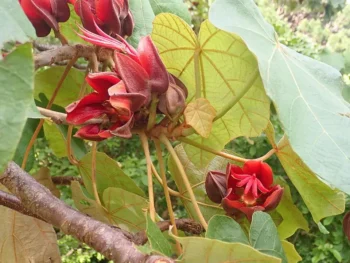
Mexican Hat Plant: The Quirky Tree That Gives Nature a High-Five
Meet the Mexican hat plant (Chiranthodendron pentadactylon), a tree so unusual that it seems like Mother Nature was feeling particularly creative when she designed it. With flowers that literally look like tiny red hands reaching out to give you a high-five, this remarkable tree is sure to be the conversation starter of any garden lucky enough to host one.
What Makes the Mexican Hat Plant Special?
Also known by its scientific name Chiranthodendron pentadactylon, and sometimes called by its synonym Cheirostemon platanoides, this tree earns its common name from its truly extraordinary flowers. Each bloom features five bright red, finger-like stamens that extend outward like an open hand – hence the Mexican hat reference, though hand tree might be more accurate!
The aesthetic appeal goes beyond just the quirky flowers. This tree boasts large, broad leaves that create excellent shade and give it a tropical, almost prehistoric appearance. When not in bloom, it’s still an impressive specimen tree that commands attention in any landscape.
Where Does It Come From?
The Mexican hat plant is native to the cloud forests of Mexico and Guatemala, where it thrives in the misty, humid conditions of high-altitude tropical regions. These trees have adapted to life in the canopy layers of these unique ecosystems, which explains their specific growing requirements.
Should You Plant One?
Here’s the honest truth: the Mexican hat plant isn’t for every gardener or every garden. This tree is best suited for:
- Collectors of unusual plants who love conversation pieces
- Botanical gardens and arboretums
- Warm climate landscapes in USDA zones 9b-11
- Gardens with space for a medium to large specimen tree
- Areas with high humidity or the ability to provide supplemental moisture
If you’re looking for native alternatives that provide similar visual interest and ecological benefits, consider native flowering trees in your region that support local wildlife and pollinators.
Growing Conditions and Care
Successfully growing a Mexican hat plant requires mimicking its cloud forest origins as closely as possible:
Climate Requirements: This tree is only hardy in USDA zones 9b through 11, making it suitable primarily for frost-free or nearly frost-free areas. It absolutely cannot tolerate freezing temperatures.
Soil and Water: Provide well-draining soil that retains some moisture. Think moist but not soggy – the tree needs consistent water but will suffer in waterlogged conditions.
Light Conditions: Partial shade works best. While it can handle some direct sunlight, too much intense sun can stress the plant, especially in hotter climates.
Humidity: High humidity is crucial. If you live in a dry climate, you’ll need to create a microclimate with regular misting or placement near water features.
Planting and Care Tips
- Plant in spring after the last frost danger has passed
- Choose a location protected from strong winds, which can damage the large leaves
- Water consistently during the growing season, reducing slightly in winter
- Feed regularly with a balanced fertilizer during the growing season
- Mulch around the base to help retain soil moisture and regulate temperature
- Prune minimally and only to remove dead or damaged branches
Wildlife and Pollinator Benefits
While not native to most North American gardens, the Mexican hat plant does offer some wildlife benefits. The unique flowers attract hummingbirds, who are drawn to the red color and nectar. Some insects may also visit the blooms, though this tree won’t support the complex web of native insects that co-evolved with local flora.
The Bottom Line
The Mexican hat plant is undeniably fascinating – a true botanical curiosity that can add exotic flair to the right garden. However, it’s a high-maintenance choice that requires specific conditions and won’t provide the same ecological benefits as native species. If you have the right climate, the space, and the dedication to meet its needs, it can be a rewarding addition for plant collectors and those who love unique specimens. Just remember to also include plenty of native plants in your landscape to support local wildlife and create a truly sustainable garden ecosystem.